Quick answer
To choose the right-size hydraulic seal, measure three numbers from the old set: inside diameter, outside diameter, and thickness, then match the correct profile before you buy. A small error in any number lets the seal leak or get crammed and wear fast. If the old seal is torn, measure the metal, the rod and bore diameters, to work back to the right set.
Choosing hydraulic seals of the right size means measuring three numbers from the old set — inside diameter, outside diameter, and thickness — then matching them to the correct profile before you buy. It sounds simple, but most oil-leak jobs that come back to the shop trace back to a small mismatch made at this step. This guide walks through each measurement and each seal type inside an excavator cylinder, so you understand why a hair off means oil weeps out, and how to avoid buying the wrong part.
Why choosing the right seal size matters so much
A hydraulic seal works inside a very narrow gap between two sliding metal faces. It has to fit tight enough to hold oil, yet not so tight that it gets crushed and torn as the rod moves. Off by a little, the seal either leaves a gap for oil to slip through, or binds and wears fast. That is why choosing a hydraulic seal is not something you settle by eye.
What a cylinder seal kit contains
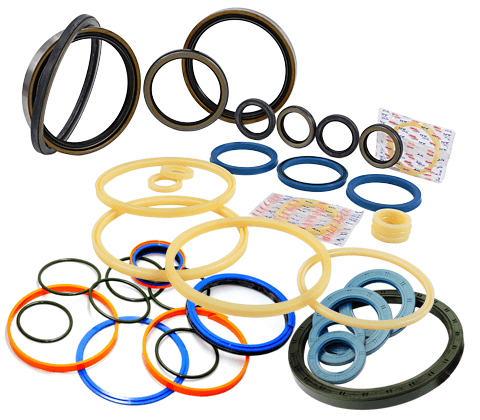
An excavator cylinder does not use just one seal. It is a set of several parts working together, each with its own job. Knowing each type keeps you from buying short or fitting a part in the wrong place.
- Piston seal: blocks oil between the two chambers inside the barrel.
- Rod seal: keeps oil from weeping out along the rod.
- Dust seal: wipes grit and water off the rod as it retracts.
- Wear ring: keeps the piston and rod running on center.
- Backup ring: supports the main seal and stops it extruding into the gap.
The three numbers that decide everything: ID, OD, thickness
Every hydraulic seal comes down to three numbers. The inside diameter is the ring that hugs the rod or shaft. The outside diameter is the ring that rests against the barrel bore or piston groove. The thickness is the height of the seal sitting in the groove. Miss any one number and you cannot pin down the right set.
Measuring the inside diameter correctly
Measure the inside diameter at the inner lip, where the seal touches the rod. If the old seal is still whole, lay it flat and measure across the center with a caliper. If it has torn, measure the steel rod diameter directly, because the seal has to hug that rod. Take the reading in a few spots and keep the steadiest one, avoiding any part of the rod worn tapered.
Measuring the outside diameter and the fit gap
The outside diameter decides whether the seal sits neatly in its groove. For a piston seal, measure the cylinder barrel bore, since the seal rests against the bore wall. For a rod seal, measure the bore in the cylinder head where the seal fits. This number has to be accurate, because a touch oversize gets crammed, and a touch undersize lets oil run around the back of the seal.
Thickness — the detail people skip
Many measure both diameters and forget thickness. This is a common trap when you try to spot genuine NOK seals against fakes, because fakes often go wrong right here. Wrong thickness leaves the seal loose in its groove, or keeps the cap from closing. Measure the seal height with a caliper and record it alongside the two diameters.
Seal profile: why you cannot swap them
At the same diameter, seals still come in several cross-section shapes. There are U shapes, V shapes, ones with a lip stop, ones with a spring. Each profile is worked out for one pressure direction and one kind of motion. Fit the wrong profile and, even at the right size, the seal will not hold oil because its sealing lip faces the wrong way.
How do you choose a hydraulic seal when the old one is shredded?
This is the hardest case out on site. When the old seal has broken into pieces, you have no whole sample to measure. Now measure the metal instead: rod diameter, bore diameter, and the width of the seal groove. From those three metal numbers plus the machine model, an experienced parts seller can look up the right set. If you still have one printed fragment of the old seal, bring it, because it cuts search time a lot.
How a piston seal differs from a rod seal
A piston seal takes pressure from both sides and slides in the bore, so it is usually wide and stout. A rod seal only blocks one way outward and hugs the rod, so it is softer and slimmer. If you need the exact type, a stock of hydraulic seal parts is usually sorted by these positions. Do not drop a rod seal into a piston spot just because the diameters look close.
Dust seals and wear rings
The dust seal sits outermost, wiping sand off the rod as it retracts. Skip it and grit rides the rod in and scores the main seal, so even a fresh set fails early. The wear ring keeps the rod running on center, stopping metal from touching metal. When you change a set, check both of these parts instead of fixating only on the main seal.
Reading the markings on the old seal body
Many seals have the size and material code printed right on the body. If the text is still readable, it is a more reliable source than a hand measurement. According to the technical documents from NOK, the printed numbers usually follow the order inside diameter, outside diameter, then thickness. Wipe the oil off and view it under raking light, and you can read characters that had faded.
Caliper or radius gauge — the minimum tools
You do not need expensive tools to choose the right seal. A mechanical caliper in good shape covers most cases. For deep grooves a caliper cannot reach, a set of radius gauges helps you approximate the profile. What matters is measuring at the least-worn spot and taking the reading a few times to be sure.
A hair off, a mile of leaks: how a size mismatch leaks
When the seal is slightly small, the lip cannot press hard enough on the surface, and oil seeps through as a streak. When it is slightly large, it gets crammed, builds heat, hardens, then cracks. Both errors end the same way, in a leak, just at different times. That is why a seasoned hand still measures rather than trusting a fit that merely looks right.
Seal materials: NBR, PU, Viton and the working conditions
The right size still is not enough with the wrong material. NBR suits ordinary hydraulic oil and comes at an easy price. PU resists abrasion well and often goes on rod seals exposed to sand. Viton handles heat and chemicals better, used when the machine runs hard and hot. Pick material by the machine's real working conditions, not just by the cheapest option.
Genuine versus aftermarket — how to choose right
Genuine parts give steady fit and life, but are not always in stock for every machine age. Good aftermarket still runs long if the size and material are right. The point is not the name but whether the dimensions are true and the rubber is the correct type. A well-measured aftermarket set beats a genuine set fitted in the wrong size.
Seal kits by machine model: handy but verify
Many cylinders share a seal kit by machine family; for example the K3V and K5V pump lines have their familiar matching sets. Buying by model is handy because the kit packs every part. But a machine through many repairs may have a swapped rod or a re-honed bore, throwing the size off the original spec. So even buying by model, measure a few key numbers to cross-check.
Common mistakes when choosing seals yourself
The most common mistake is measuring on a tapered, worn part of the rod, giving a number smaller than reality. The second is forgetting thickness, leaving the seal loose in its groove. The third is seeing two similar seals and calling them the same when the profiles differ. Careful measuring and writing down each number keeps you clear of all three.
Check the bore and rod before fitting new seals
A new seal at the right size still leaks if the metal surface is scored or pitted. Before fitting, run your hand along the rod for score ridges, and inspect the bore for pits. If the surface is badly damaged, treat the rod or bore first, or the new seal fails quickly too. For the full fitting order, see the guide on replacing cylinder seals to work in the right sequence.
Quick-reference table: signs of a wrong-size choice
Below are the signs that usually show when a seal set is the wrong size, so you catch it early before the machine goes into a hard shift.
| Field sign | Common cause |
|---|---|
| Oil weeps in a streak right after the change | Inside diameter too large, lip cannot press enough |
| Rod moves stiff, with a squeal | Seal crammed by an oversize outside diameter |
| Cap will not seat, groove gaps open | Seal thickness wrong for the groove |
| Seal hardens and cracks early | Wrong material, or over-squeezed by a size mismatch |
| Grit clings to the main seal lip | Dust seal missing or wrongly fitted |
When to bring a sample seal to the shop
If you are unsure about the numbers, the safest move is to bring the old seal and the machine number in person. An experienced seller cross-checking with gauges and a sample stock beats your hand measurement by a lot. Bringing a length of rod or a photo of the fitting groove helps too. It costs a trip, but in return you avoid buying a wrong part you have to throw away.
Order the right seal set for your machine
Choosing the right seal starts with three numbers and a close look at the profile; the rest is cross-checking to be sure. If you already have the measurements or the old seal sample, look through the stock of hydraulic seals to match the correct type for your cylinder. If you want advice by machine age, send the measurements and a photo of the old seal, and the technical team will help you settle on the right set.
Key takeaways
- Choosing the right seal starts with three numbers: inside diameter, outside diameter, and thickness.
- Measure at the least-worn spot and repeat the reading a few times to be sure.
- Same size but a different profile still fails to hold oil.
- When the old seal is torn, measure the rod and bore metal to work back to the kit.
- The right size still needs the right material for the machine actual working conditions.
- Check the rod and bore before fitting, since a scored surface makes a new seal leak soon.
Written by
Đỗ Thị Hương
Đỗ Thị Hương handles parts lookup and fitment, especially hydraulic seals. She writes about choosing the right seal size, spotting genuine parts and matching parts to the machine by code.
Related parts
The exact parts discussed above — send your machine model or pump code to match.