Quick answer
A swing motor inspection starts with the symptom: weak swing, jerky swing, or oil leaking at the motor. You listen, measure swing-circuit pressure and case-drain flow, and check the brake and relief valve before blaming the motor. Ruling out cheap causes first keeps you from swapping the motor needlessly.
The swing motor turns hydraulic flow into the force that rotates the whole upper structure of an excavator. When it weakens or wears, the machine swings slowly, jerks, or fails to stop cleanly. A proper swing motor inspection lets you separate a real motor fault from a valve, a brake, or just a bad oil supply. This guide moves from symptoms to preparation, through a part-by-part check, to a quick diagnostic table and how to decide between rebuild and replace — so you never pull the motor by mistake or spend money on a part that was never faulty.
What the swing motor is and how it works
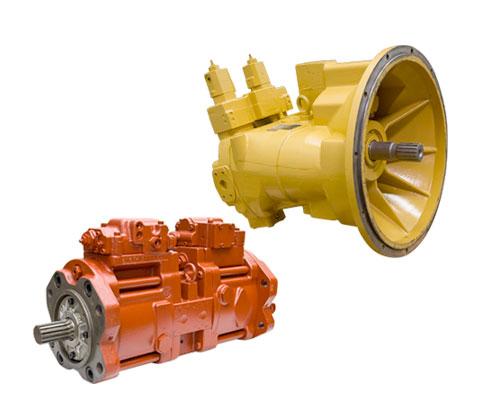
The swing motor is a piston-type hydraulic motor, usually bolted to a reduction gearbox and a swing brake. High-pressure oil from the main pump drives the pistons and turns the motor shaft. That shaft runs through the gearbox to a small pinion, which meshes with the swing gear ring on the undercarriage. That is how the cab, boom and bucket all rotate around the center.
Seeing this unit as three parts gives your inspection direction: the motor makes the force, the gearbox transmits it, and the brake holds the house still. Each part fails with its own symptom. You can browse the swing motors range to picture the layout and the common codes.
Signs you need a swing motor inspection
Before removing anything, confirm the real symptom. Inspect the swing motor when the machine shows one of these signs:
- Swinging is clearly slow under load, even with enough throttle and normal other functions.
- Swing is jerky, stalling in steps instead of turning smoothly.
- The house drifts on after you release the joystick, or stops too hard and rocks.
- A growl, metallic knock or whine comes from the swing bearing area.
- Oil leaks at the motor head, the gearbox flange, or around the brake.
- The motor body runs unusually hot to the touch after a while of work.
If only swinging is weak while lifting, digging and travel stay strong, the fault is likely inside the swing unit, not the main pump. If every function is weak, suspect the oil supply or pump first. For a general weak swing, the weak swing guide covers how to narrow it down.
Preparing before you inspect
Working on the swing unit demands safety and cleanliness. Park on level ground, lower the bucket to the ground, shut down and release pressure before opening any oil line. Hydraulic oil still under pressure can spray out hard.
Get a few basics ready:
- A pressure gauge and fittings that match the test ports on the machine.
- A graduated container and a way to measure case-drain return flow.
- Clean rags, a tray for parts, and caps to plug open lines against dirt.
- The operating manual for the exact model so you can look up the maker's spec for the model.
Dirt is the number-one enemy of a hydraulic unit. One grain of sand let in during teardown can score a piston or jam a valve. So wipe the area around every joint clean before opening it.
Listening and watching as it swings
Before you pick up a wrench, let the machine tell you. Start it, bring the oil up to working temperature, then swing slowly both ways.
Watch four things:
- Sound: a steady whine is usually low oil or trapped air; a rhythmic knock is usually a worn gear or bearing.
- Smoothness: whether the house turns evenly or stalls in steps.
- Drift: release the joystick and count how far the house coasts.
- Heat: feel the motor body and gearbox for any unusual hot spot.
Note the symptom in both swing directions. A fault in one direction only usually points to a valve or brake; a fault in both directions points to the motor or oil supply.
Check the oil and filter first
This is the cheapest step and the one most often skipped. Before you think about the motor, check the supply:
- Tank oil level: low oil makes the whole swing unit weak and hot.
- Oil color and smell: cloudy, foamy or burnt-smelling oil means trapped air or overheating.
- Return and suction filters: a clogged filter drops flow, so the machine swings weakly even with a good motor.
- Metal particles in the oil or on the filter: a sign that parts inside are wearing.
If the oil is dirty or overdue, change the oil and filter and retest before you conclude anything. Use the oil grade the maker recommends, often around VG 46 or VG 68 depending on climate and model. Many weak-swing cases are just a dirty filter, a cheap fix instead of a teardown. Filters and related hydraulic-pump parts tie directly to this oil supply.
Is it the motor, the valve or the brake?
This is the most expensive question to answer wrong. Three culprits give nearly the same symptom, but you rule them out differently.
- Weak evenly in both directions with other functions strong: suspect a worn motor or a leaking swing relief valve.
- Weak or drifting in one direction only: suspect the anti-reaction valve or that direction's relief valve.
- The house will not hold on a slope and coasts freely with the engine off: suspect a swing brake not releasing fully, or worn.
- Every function weak: go back and check the main pump and oil supply.
The surest method is to measure pressure. Read the swing-circuit relief pressure and compare it with the maker's spec for the model. Below-spec pressure points to the valve; correct pressure with a still-weak swing points to an internally leaking motor. If the machine feels weak across many functions, see the guide on an excavator low on power.
Checking the swing brake
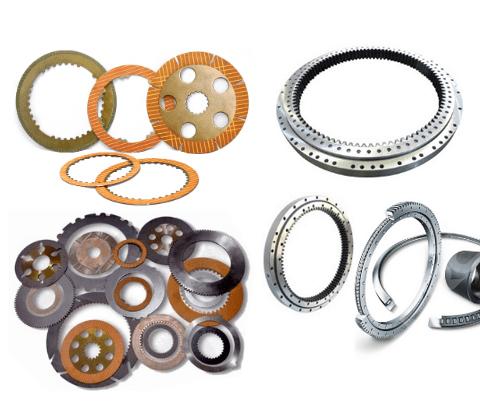
The swing brake is a wet multi-disc brake, released by pilot pressure and closed by springs when you are not swinging. If it does not fully release, the motor drags the brake as extra load, causing weak, hot swinging. If it is worn or stuck, the house drifts or holds poorly.
Check it like this:
- Listen at the start of a swing: a heavy lag on start-up can mean the brake releases slowly.
- Check that the pilot line feeding the brake has enough pressure.
- Park on a gentle slope, shut down, and see whether the house creeps.
- If you can open it, check disc wear against the maker's spec for the model.
The brake and motor usually share one unit, so when you open it, check both at once to save a second teardown.
Measuring case-drain flow to gauge motor wear
Every piston motor has a case-drain line that leaks a little oil back to the tank. As the pistons and cylinder block wear, more oil slips past the clearances and the drain flow rises. Measuring that flow is the most direct way to know whether the motor is still healthy or leaking internally.
How to do it:
- Disconnect the case-drain line at the motor and route it into a graduated container.
- Run the machine in a light-load swing as the maker directs.
- Measure the return flow over a fixed time.
- Compare it with the maker's spec for the model.
Flow above the allowed limit means the motor is well worn and likely needs a rebuild or replacement. Flow within the range means the motor is still good, so go back to suspecting the valve or brake.
Checking the relief and anti-reaction valves
The swing circuit has a relief valve to cap pressure, and usually an anti-reaction valve so the house stops smoothly. A leaking relief valve makes swinging weak; a faulty anti-reaction valve makes the house jerk or drift on stop.
Check them:
- Read the swing relief pressure and compare with the maker's spec for the model.
- See whether a valve is stuck with dirt; many cases just need cleaning.
- Check the spring and the valve cone face for pitting and scoring.
- Swap to test: if you trade valves between the two sides and the fault follows, the valve is the culprit.
A valve is far cheaper than a motor. Always rule out the valve before you blame the motor.
Checking the swing reduction gearbox
The reduction gearbox sits between the motor and the swing pinion. Inside is a planetary gear set running in its own oil. A worn box gives a rhythmic knock, metal particles in the oil, and sometimes play that makes the swing lag.
Check it:
- Drain the gearbox oil and look for metal, cloudiness or water.
- Listen during a slow swing: a grinding or rhythmic knock points to a gear or bearing.
- Check the output shaft for play.
- The gearbox oil level must be correct; low oil wears the gears fast.
Change the gearbox oil at the hour interval the maker recommends, often around the 500 or 1000-hour marks depending on model and duty.
Checking seals and external leaks
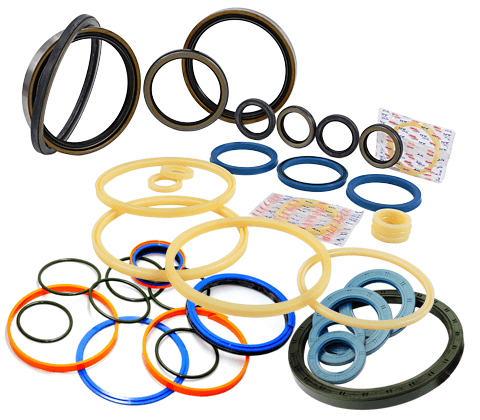
An external leak both loses oil and pulls dirt in. On the swing unit the usual leak points are the motor shaft seal, the flange between motor and gearbox, and the gearbox output seal.
- Wipe clean, run the machine, and find where fresh oil weeps.
- A shaft-seal leak is usually an aged seal or a scored shaft.
- A flange leak is usually a hardened gasket or a loose bolt.
- Gearbox oil mixed with hydraulic oil can mean the seal between the two chambers has failed.
Replacing a seal early is far cheaper than letting dirt in and ruining the whole unit.
Checking the swing bearing and gear ring
The swing bearing carries the whole upper structure and transmits the turning force. Its bearing and teeth wear with their own symptoms: heavy swing at certain positions, noise at a specific angle, or large play when you rock the boom.
- Swing a full circle and listen for any spot that is heavier or noisy.
- Check vertical play by pressing the bucket on the ground and watching the gap.
- See whether the gear-ring grease is still enough and clean.
- Check that the ring bolts are tight and not cracked.
Greasing the ring on schedule is a cheap job that clearly extends its life. This is an expensive part, so never let the grease dry out.
A 7-step swing motor inspection procedure
Pulled together into a tidy procedure for the workshop. A swing motor inspection should run cheapest-first:
- Confirm the symptom: weak, jerky, drifting or leaking, in one direction or both.
- Check oil and filter: level, color, metal particles; change if dirty.
- Measure swing pressure: compare relief pressure with the maker's spec for the model.
- Check the swing brake: does it release fully, does the house drift.
- Check the valves: relief and anti-reaction, clean or swap to localize.
- Measure case-drain flow: decide whether the motor is healthy or leaking internally.
- Open the gearbox and seals if still in doubt: inspect gears, bearings, seals.
Following this order lets you stop at the right place, and never pull the motor when the fault is only a filter or a valve.
Quick symptom-and-cause table
The table below groups the common symptoms with the priority suspect.
| Symptom | Suspect first | How to confirm |
|---|---|---|
| Weak evenly in both directions | Internal motor leak, leaking relief | Measure pressure and drain flow |
| Weak or drift in one direction | Relief or anti-reaction valve on that side | Swap valve, measure each side |
| House drifts with engine off | Swing brake worn or stuck | Park on slope, check brake |
| Jerky, stepping swing | Gear, bearing, or trapped air | Listen, drain gearbox oil |
| Metallic knock | Gearbox bearing, gear ring | Drain for metal, check play |
| Oil leak at swing unit | Shaft seal, flange gasket | Wipe clean, find fresh weep |
| Motor body too hot | Internal leak, brake not releasing | Measure drain flow, check brake pilot |
This table is only for quick narrowing. Always confirm with a measurement before replacing an expensive part.
When to rebuild and when to replace
Once you have pinned the motor as faulty, the next question is rebuild or replace. There is no single answer, but a few markers help you weigh it:
- Only the seals worn and the surfaces still good: rebuild, fit a seal kit, cheap and quick.
- Pistons and block lightly scored: a rebuild can work if you find a good shop and good parts.
- Cylinder block or valve plate deeply pitted: replacing the rotary group or the whole motor is usually worth more.
- The machine is needed urgently and the motor is hard to find: consider a sound used part to run for now.
Compare the rebuild cost with the price of a genuine or replacement motor before you decide. Sometimes a rebuild is half the price; sometimes it saves little and lasts less.
Genuine, replacement or used parts
When you do replace, you have three familiar options, each with its place:
- Genuine parts: right to spec, durable, highest price. Best for newer machines or heavy continuous duty.
- Replacement parts: softer price, quality varies by supplier, so pick one with a clear warranty.
- Used parts: cheap and available now, but check the condition carefully before fitting.
The common thread is that it must be the right code and the right model. A motor that bolts on is not guaranteed to have the right flow and gear ratio. Send the old unit code and the machine model to match before you order.
Common mistakes during inspection
A few mistakes come up again and again and send the diagnosis the wrong way:
- Calling the motor faulty without measuring drain flow or pressure.
- Skipping the filter and oil level and going straight to the swing unit.
- Not separating a one-direction fault from a both-direction fault.
- Opening the unit out in the dust and dirtying the parts you just fitted.
- Fitting a different-flow motor and then wondering why the swing is not as before.
Avoiding these five saves most of the cost and time. If the machine also pulls to one side while traveling, see the guide on an excavator tracking off to one side, as it can involve the same valves and travel motor.
Preventive maintenance for a durable swing
Most swing-unit failures come from dirty oil and poor lubrication. A few habits keep the swing unit healthy:
- Change hydraulic oil and filters on schedule by machine hours, often around the 250, 500, 1000 or 2000-hour marks by item.
- Grease the gear ring and lubricate the swing points on schedule.
- Check the reduction gearbox oil level regularly.
- Fix leaks early so dirt cannot get in.
- Listen to the machine daily; an odd sound is the earliest warning.
Regular maintenance is far cheaper than one swing-unit replacement. Keep an hours log and a maintenance record so nothing is forgotten.
How Việt Trung Hải helps you match parts
If you have inspected the machine but are not sure the motor is still usable or needs replacing, let Việt Trung Hải help you match it. Send the machine model and the pump code or swing-unit code so we can look up the right part for your model. For the original technical figures, you can also check the manufacturer's own material such as Hitachi to confirm the right model before ordering.
Key takeaways
- Weak swinging while lifting and digging stay strong usually points to the swing unit, not the main pump.
- Always check the oil and filter before suspecting the swing motor.
- Swing-circuit pressure and case-drain return flow are the two deciding measurements.
- Swing drift when stopping is usually a brake or valve fault, not the motor.
- Rule out the valve first because it is far cheaper than the motor.
- Send the machine model and swing-unit code to match the right part before ordering.
Written by
Nguyễn Văn Hùng
Nguyễn Văn Hùng diagnoses excavator faults by symptom — sounds, heat and how the machine responds. He writes the guides that separate causes and lay out repairs from cheap to expensive, based on hands-on workshop experience.
Related parts
The exact parts discussed above — send your machine model or pump code to match.
Related products
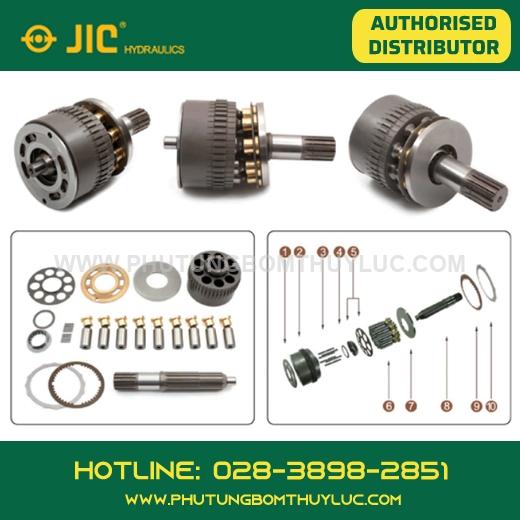
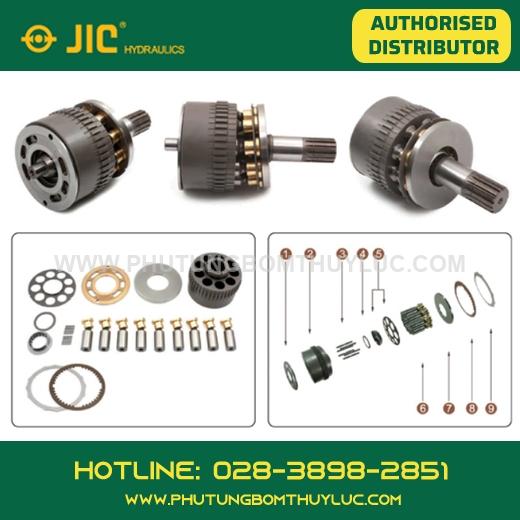 Kawasaki · M2XSwing motor rotary group – Kawasaki M2X120M2X120On requestView · get a quote
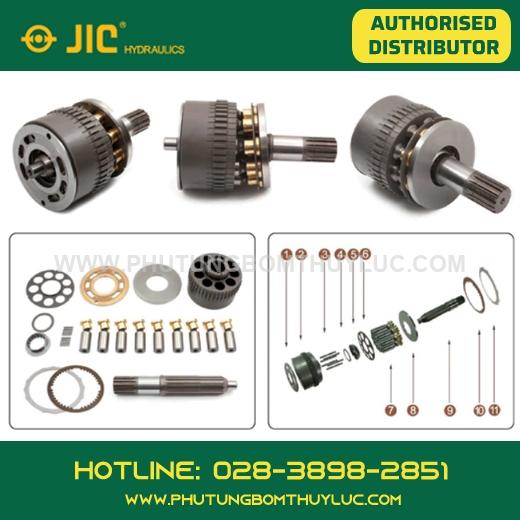
 Kawasaki · M2XSwing motor rotary group – Kawasaki M2X146M2X146On requestView · get a quote
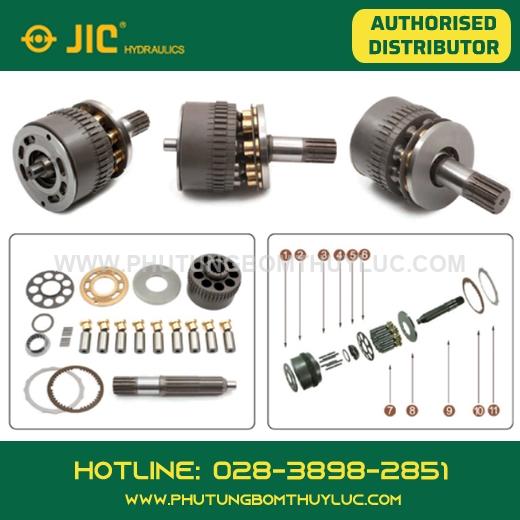
 Kawasaki · M2XSwing motor rotary group – Kawasaki M2X150M2X150On requestView · get a quote
 Kawasaki · M2XSwing motor rotary group – Kawasaki M2X170M2X170On requestView · get a quote