Quick answer
A dust-packed hydraulic oil cooler stops air from passing through, so the oil holds its heat and the machine warms up. Cleaning it right means rinsing from back to front against the airflow, keeping pressure moderate so the fins are not crushed, then checking the fan and lines. Set the cleaning schedule by how dusty the site is to keep the oil cool.
A hydraulic oil cooler is the part that sheds heat from the oil before it returns to the tank. When the fins pack with dust and dirt, air can no longer pass through, the oil holds its heat, and the machine warms up over the shift. Cleaning it properly means three things: a gentle rinse in the right direction, a check of the fan and the lines, then a cleaning schedule set by how dusty the site is. This guide walks through each step the way a workshop would, based on real field cues rather than complicated numbers.
What does a hydraulic oil cooler do?
Hydraulic oil generates heat every time it passes through the pump, valves, and motors. That heat has to leave the system, or the oil warms up as the machine runs. The hydraulic oil cooler is where that heat leaves. Hot oil flows through small tubes while fan air passes across the fins and carries the heat away.
A cooler in good shape keeps the return oil at a steady, cool level. The machine runs smooth and the seals last longer. A weak cooler lets hot oil spread through the whole system.
Why does a dust-packed cooler make the oil hot?
The cooler works because air passes through the gaps between the fins. Dust, dirt, leaves, and oil mist settle into those gaps over time. Once the gaps are blocked, air stops passing through, even though the fan still spins at full speed. The result is hot oil while everything looks normal on the surface.
This is a quiet kind of failure. The cooler does not crack or leak, but its ability to shed heat drops off. Many owners only notice once the machine is clearly hot mid-shift.
What are the signs a cooler is already dirty?
The first cue is usually a machine that goes weak in the sun or late in the shift. Hot oil thins out, pressure fades, and the boom moves slower than when the machine was cold. Standing near the cooler, you feel more heat coming off it than usual.
Look straight at the cooler face. If a layer of dust and dirt covers the gaps, it is almost certainly starved of air. A quick check is to shine a light from behind the cooler; if the light struggles to pass through, the gaps are heavily blocked.
Preparing before you clean
Park on level ground, shut the machine off, and let it cool. Do not rinse while the cooler is still hot, because a sudden temperature swing can crack the joints and warp the fins. Have clean water, a moderate nozzle, a soft brush, and compressed air if you have it.
Open the hood and look at the whole layout before you touch anything. Identify which is the hydraulic oil cooler, which is the engine radiator, and which is the charge-air cooler if the machine has one. They usually sit close together, so they are easy to mix up.
The correct steps to rinse a hydraulic oil cooler
Go slow and in the right direction, and the cooler comes clean without damage.
- Use compressed air or a soft brush to knock off the dry dust and leaf debris on the face first.
- Rinse water from the back toward the front, against the direction the fan blows, to push the dust back out the way it came in.
- Keep the nozzle square to the fin face; do not spray at an angle, which flattens the gaps.
- Keep a sensible distance with moderate pressure; too much pressure crushes the fins and cuts the cooling area.
- Work from top to bottom in strips, letting the dust wash down with the water.
- Rinse a second time to check, and shine a light through the cooler to confirm the gaps are clear.
- Let the cooler dry, or blow it dry with compressed air before starting the engine.
Common mistakes when rinsing
The most common mistake is spraying too hard and too close. The fins are thin, and crushing one patch means that area loses its airflow for good. The second mistake is spraying with the airflow, which drives dust deeper into the space between the two cores.
Many people also forget the dry leaf debris trapped between the oil cooler and the radiator. That spot is hidden, the rinse never reaches it, and dust builds into a hard mat. Use a plastic rod or compressed air to reach into the gap between the two cores.
Checking the fan and the fan clutch
A clean cooler with a weak fan still leaves the oil hot. Check the fan blades for cracks, chips, or oil film. Oil-coated blades pick up dust fast, go out of balance, and vibrate when they run.
On machines with a thermal fan clutch, listen to the fan as the machine warms: it should roar up when cooling is needed. If the fan always spins soft and even, the clutch may be weak. On a hydraulically driven fan, check whether the fan motor turns with enough force when the machine is hot.
Checking the lines and seals around the cooler
Oil weeping around the cooler necks points to hardened seals or a loose fitting. Leaking oil both loses fluid and pulls dust into a thicker coat on the cooler face. Wipe the area clean, run the machine, and watch where oil seeps back.
Feel along the lines running to and from the cooler for swelling, fine cracks, or chafe points. A hose with a hidden crack may hold when cold but weep when hot and under pressure. If the system runs hot often, read more about overheating hydraulic oil to narrow down the real cause.
The oil cooler and radiator sit close together — what to watch
On most excavators, the hydraulic oil cooler sits right in front of or behind the engine radiator. Both cores share the air from a single fan. If either one clogs, both run hot.
So when you clean, clean the whole stack rather than fixating on one core. The narrow gap between the two layers is where dust builds the most and hides the best. Miss that spot and the machine stays hot after the wash.
Should you use chemical cleaner on the cooler?
For ordinary dirt, clean water and compressed air are enough. Only when the face is coated with oily grease that traps dust do you need a mild degreaser. Dilute it, coat the face, let it soak, then rinse off with clean water.
Avoid strong chemicals that corrode metal, especially on an aluminum cooler. Strong agents thin the fins and eat the joints over time. According to the technical documentation from Hitachi, a gentle cleaning method that follows the airflow direction is preferred to keep the fins intact.
A cleaning schedule based on the work environment
Cleaning frequency depends on how dusty the site is; there is no fixed number for every machine. A machine in a dusty quarry needs cleaning far more often than one on a clean site. The table below is how a workshop divides it by real feel.
| Work environment | Dust level | Check and rinse rhythm |
|---|---|---|
| Quarry, crushing, cement | Very high | Check very often, rinse the moment buildup shows |
| Grading, dry soil, dusty roads | High | Check often through the work week |
| Urban construction, streets | Medium | Check on a regular service schedule |
| Yards, warehouses, damp low-dust ground | Low | Check less often, but never skip entirely |
Treat this table as a starting point. Your machine may need a tighter rhythm if the shifts are long or the sun is harsh.
Cleaning the cooler in quarries and dusty sites
In heavy dust, the cooler can pack solid in just a few days. Build the habit of eyeing the cooler face each time you grease up at the start of a shift. See a thin layer and blow it with compressed air right away, rather than waiting for the big cleaning.
Fine stone dust clings harder than ordinary dirt, so the rinse has to be enough to wash it off. After each heavy stint, spending a few minutes to blow it clean beats losing power mid-shift. Keeping the cooler open to airflow is the cheapest way to keep the oil cool.
How does a dirty cooler tie into overheating oil?
The cooler is the main line of defense against hot oil. When it clogs, the oil cannot shed heat in time, and heat piles up with each circulation loop. Hot oil thins, the oil film gets thinner, and the pump and valves wear faster.
If you have cleaned the cooler and the oil is still hot, the problem may sit elsewhere in the system. At that point, follow the guidance on overheating hydraulic oil to find the root cause instead of blaming the cooler for everything.
Hydraulic filters and the cooler — a pair that keeps oil cool
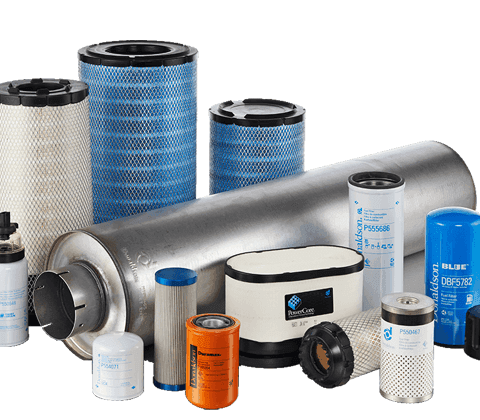
A dirty filter makes oil push through harder, adding heat and restriction. The cooler then has to carry more of the load. So change filters on time alongside keeping the cooler clean.
When you change the hydraulic filters, take the chance to eye the cooler face and the fan assembly too. Doing both at once saves the labor of tearing down twice. Clear filters and a clean cooler let the oil move easy, so less heat is made in the first place.
When can cleaning no longer save a cooler?
Some failures a wash cannot fix. A punctured cooler that clearly leaks oil has to be brazed or replaced. A cooler with a large crushed patch of fins has lost its airflow in that area for good.
A cooler blocked inside by hardened oil sludge is the hardest case. The outside looks clean but the oil stays hot; that is when you need a deep internal flush or a new cooler. Do not keep rinsing when the trouble is inside the tubes.
How does a dirty cooler affect the hydraulic pump?
Hot oil is the quiet enemy of the pump. When heat is high, oil thins and the lubricating film between pump parts gets thinner. The shoes, plate, and pistons in the pump grind on each other faster and shed metal.
A vicious loop starts: a worn pump makes more heat, and heat wears the pump faster. Keeping the cooler clean is the cheapest, easiest way to protect the pump. When the pump already makes odd noises or runs clearly weak, look over the hydraulic-pump parts that suit the K3V or K5V pump family on your machine.
Hot machine versus boiling coolant — telling them apart
Many people see a hot machine and jump straight to boiling coolant, but hot hydraulic oil and hot engine coolant are two different things. A clogged oil cooler heats the oil, which shows up as a weak machine with a slow boom. A clogged or low radiator boils the coolant, which shows up as the engine temperature needle climbing.
Both cores share one airflow, so sometimes they get dirty together. If the machine is both hot and showing boiling coolant, cross-check with the guide on an overheating excavator to separate the real cause before pulling parts.
Routine care for the fan and fins
Bent, flattened fins can be gently straightened with a proper fin comb. Work carefully, because the fins are very thin and heavy handling snaps them. Every gap straightened back is a little more airflow area returned.
The fan blades also need the oil wiped off and the balance checked. A fan that vibrates for a long time ruins the bushings and bearings. A clean, balanced fan assembly spreads air evenly across the whole cooler face.
Logging and tracking machine temperature
Watching the temperature needle and feeling the machine's strength each day is a good habit. Note the last cooler cleaning and the working conditions. When the machine starts running hot earlier than usual, that is your reminder to check the cooler.
You do not need expensive measuring gear. An operator's steady feel often catches trouble earlier than any gauge. Logging lets you see the trend instead of only seeing the breakdown.
Mistakes that wear a cooler out fast
The biggest mistake is leaving the cooler alone until the machine runs hot, then washing it. Dust left long packs hard, is difficult to clean, and has already done harm. Another mistake is finishing the wash but forgetting to check the fan, assuming a clean cooler is the whole job.
Some people blast high pressure up close to be quick and crush whole patches of fins without knowing. That cooler looks clean but sheds air poorly. Right direction, right pressure, and enough patience is how you keep a cooler healthy.
Keeping the machine cool starts with a clean cooler
An open, airflowing cooler is the cheapest investment in the life of the hydraulic system. Clean it properly, check the fan and the lines, and set a schedule by dust level, and the oil stays cool. When you need filters, seals, or replacement parts matched to your machine, look at the hydraulic-pump parts and hydraulic filters from Viet Trung Hai, or call for advice on the right part for your machine.
Key takeaways
- A dust-packed hydraulic oil cooler is the quiet reason oil runs hot and the machine goes weak.
- Rinse from back to front, against the fan airflow, keeping the nozzle square to the fins.
- Use moderate pressure at a sensible distance; too much crushes fins and loses airflow for good.
- A clean cooler with a weak fan or failed clutch still runs hot, so check both.
- Set the cleaning schedule by dust level; quarries and dusty sites need it far more often.
- If oil stays hot after cleaning, trace other causes in the system instead of blaming the cooler.
Written by
Lê Minh Tuấn
Lê Minh Tuấn handles scheduled maintenance and machine longevity at Việt Trung Hải. He writes about oil, filters, service intervals and the habits that keep machines running reliably.
Related parts
The exact parts discussed above — send your machine model or pump code to match.