Quick answer
Choosing between genuine and replacement parts should follow the part's role, not just the price. Favour genuine on heavy-load groups like the rotary group and main valve; use a reputable replacement for common parts. Always match by model and pump number before ordering, and judge cost per machine hour rather than purchase price.
Choosing between genuine parts and replacement parts is a call every mechanic faces when an excavator is down and waiting for stock. Genuine parts are dependable but pricey, replacement parts are cheaper with quality all over the map, and used parts are hit or miss. This guide talks straight from the workshop: which type belongs on which part, how to spot the real thing, and how to judge cost per machine hour instead of the number on the invoice. The goal is to help you decide fast without paying for it later with a wrecked pump.
What are genuine and replacement parts?
Before weighing options, name each type correctly. Genuine parts and replacement parts differ by origin, not by price tier of the same item.
- Genuine parts: made by the machine maker or its appointed supplier, to the right drawing, material and tolerance.
- Replacement parts: made by a third party to fit the machine, quality ranging from very good to very poor.
- Used parts: pulled from an old machine, cleaned up and resold.
These three serve three different situations. Knowing the line keeps you from buying the wrong expectation, and from paying genuine money for a rebuilt item.
What you gain and lose with genuine parts
The strength of genuine parts is certainty. Material, heat treatment and tolerance all follow the maker's spec for the model. It fits, it runs to the right characteristics, its life is predictable. For heavy-load groups, that is worth the money.
The clear downside is price and lead time. Many part numbers must be ordered, sometimes weeks out. For a machine on an urgent job, downtime often costs more than the parts price gap. So genuine parts make the most sense when you need high reliability and can wait, or when the part failing takes the whole group with it.
Replacement parts: good and bad mixed together
Replacement parts are the widest group and the hardest to judge. Some makers do excellent work, near-equal to genuine at a softer price. Others cut corners, wrong material, wrong tolerance, running a while then failing.
The trouble is you cannot tell good from bad by looks. Two items share a shape and paint colour, but the steel and heat treatment differ completely. Experience and a trusted supply are what let you filter. With replacement parts, the maker's name and the seller matter as much as the item itself.
Used parts: cheap but a gamble
Used parts come off scrapped machines. The upside is cheap and on hand, sometimes the only way to find a part for a model out of production. The downside is you do not know how many hours it ran or how worn it is.
For a few low-load parts, a sound used piece can be acceptable. But for precision hydraulic groups like pumps and valves, used is a gamble. A used rotary group that still looks good can already be worn to its clearance limit. If you must use one, pick a source that lets you inspect it and allows returns.
Quick comparison of the three types
The table sums it up for a fast picture; the final call still depends on the exact part.
| Criterion | Genuine | Replacement | Used |
|---|---|---|---|
| Reliability | High, steady | Medium to high, by maker | Hard to predict |
| Price | Highest | Moderate | Cheapest |
| Availability | May need to wait | Usually in stock | On hand but uncertain |
| Predictable life | Clear | By source | Unknown |
| Best for | Heavy, critical groups | Common parts | Minor parts, older machines |
Which parts deserve genuine?
Not everything needs genuine, but some spots you should not skimp. Favour genuine parts for anything whose failure drags down a bigger assembly or stops the machine for days.
The priority group includes hydraulic rotary groups, the main control valve, internals of travel and swing motors, and high-pressure seals. These are places where a small material or tolerance error is enough to ruin the whole group. The money saved on a cheap item rarely covers the cost of the redo.
Which parts run fine on replacement
Many parts run long and well on a good replacement, and this is where you save sensibly. Light-load, easy-to-check, easy-to-swap parts usually do not demand genuine.
Think filters, hoses, common gaskets, bushings, pins, bucket pins and much of the undercarriage. As long as you pick a reputable maker and the right size to the maker's spec for the model, replacement in this group gives good economy. This is where most fleets trim running cost without hurting reliability.
Hydraulic rotary groups: do not skimp here
The rotary group is where clearances run in thousandths, so material and heat treatment decide everything. A poorly made set of hydraulic rotary groups can run smooth for a few hundred hours then wear fast, making the machine fade as the oil heats up.
Here the price gap between good and poor is small next to the consequence. If you go replacement, pick a maker who specialises in hydraulics and is known in the trade. Do not drop an unknown rotary group into a good pump just to save a little.
Hydraulic seals: read the material, not the label
Seals get underrated. From outside they look alike, but material and heat resistance vary a lot. A seal of the wrong material can harden or swell in hot oil, leaking early.
When buying seals, what matters is the right size, type and material for the oil in use. We have a separate piece on telling genuine seals from fakes so you do not buy wrong. For seals, a good replacement maker is often enough, as long as the spec is right.
How to spot genuine parts
Fakes look ever closer to the real thing, so check in sequence instead of trusting your eyes. Here are the steps we use on receiving:
- Match the part number to the maker's catalogue for the exact model.
- Look at packaging, labels and print for sharpness and consistency.
- Compare weight and feel against an item you know is genuine.
- Check machined surfaces, threads and chamfers for cleanliness.
- Ask the batch's origin and request paperwork if available.
No single step is enough, but together they give a fairly clear picture. When in doubt, cross-check with a trusted seller before fitting.
Signs of fakes and rebuilds
A rebuild is an old part refinished and sold as new. Common signs are uneven repaint, grinding marks on a surface that should be smooth, or restamped numbers. Off-colour boxes, wrong fonts and sloppy labels are warnings too.
By feel, fakes are often lighter or oddly heavy from wrong material. Threads do not run sweet, clearances feel loose, machined surfaces are rough. See these signs and do not fit it to a machine running well. Removal and refit always cost more than the initial saving.
Match by model and pump number
A part that fits one model may not fit another, even if it looks the same. Makers change designs over the years. So matching by model and serial is a step you do not skip.
For pumps and motors, take the exact number stamped on the housing, do not guess. Many wrong fits come from two near-identical numbers differing by one suffix. Giving the seller the model, serial and pump number to cross-check cuts the risk of a wrong part sharply.
Cheap that turns expensive: cost per machine hour
Judging by purchase price alone is the wrong comparison. The right way is cost per machine hour delivered. A part half the price but lasting a third as long is actually dearer.
Add the hidden costs: labour to fit, oil, filters changed along with it, and above all downtime. For a machine on a job, a day down can equal several times the parts price gap. Counted fully, genuine parts or good replacement usually come out cheaper long-term on critical groups.
Warranty and standing behind the part
Warranty is a big divider between sources. Genuine parts and replacement from a serious supplier usually come with a clear return policy. Grey-market goods rarely do.
Before buying, ask the warranty terms and how a bad fit is handled. Keep the invoice and packaging. A supplier who stands behind their goods is a far better sign than the cheapest price on the market. After-sale responsibility is often worth more than a few percent of price gap.
Do not mix sources in one group
A common mistake is blending sources within one group to save money. For instance a genuine piston with a replacement block of different tolerance. The result is uneven clearances, off characteristics and lopsided wear.
In a precision group, parts are designed to match as a set. When rebuilding, keep the source consistent for parts that mate directly. Saving by mixing usually backfires and is hard to diagnose when trouble comes.
Rebuild the rotary group or buy a new pump?
This comes up once a pump is weak. If the housing is still good, a new rotary group usually costs less than a whole pump. But if the housing is deeply scored or worn, a new group will not save it.
The call depends on the real state of the housing and the budget. We go deep in our piece on rebuild the rotary group or buy new. The key is to check the housing first, then choose between genuine and replacement for the group. Do not reverse that order.
Where to buy parts with confidence
The source decides most of the risk, especially for replacement. A trusted seller matches to the exact model, advises honestly, and stands behind the goods. A seller chasing the lowest price usually carries higher risk.
If you are looking for heavy-equipment parts for an excavator, pick a place that knows both the machine and the parts. We have a guide on where to buy parts right for choosing a source. A good seller asks for the model and pump number before quoting, rather than selling blind.
Common mistakes choosing genuine and replacement parts
The most common mistake is looking only at price. The second is the opposite extreme, demanding genuine for everything including minor parts, driving up cost with no need.
A few other frequent errors:
- Not matching the model, buying by shape.
- Mixing sources in a precision group.
- Skipping warranty to save a little.
- Using used parts on the main hydraulic group.
Avoid these and choosing between genuine and replacement parts becomes simpler and far less risky.
A routine for choosing parts on a job
Going into a repair, we follow a fixed sequence so nothing slips. It balances cost against reliability.
- Identify the failed part and its role in the group.
- Sort it as heavy-load or common.
- Critical part: favour genuine or a good replacement.
- Common part: pick a reputable replacement to the right spec.
- Match model, serial and pump number before ordering.
- Ask the warranty and keep the paperwork.
Follow this and you save where you should and stay solid where it counts.
How to decide in the end
There is no single answer for every part. The short rule: solid on critical groups, thrifty on common parts, and always match by model. Genuine, replacement and used each have their right place.
If you are weighing a specific job, send the model and pump number to Việt Trung Hải so we can cross-check and advise the right type. You can also look up the genuine catalogue on the maker's site, for example Volvo, to match numbers before you decide.
Key takeaways
- Genuine and replacement parts differ by origin, not two price tiers of the same item.
- Favour genuine for the rotary group, main valve and heavy-load groups.
- A reputable replacement is good enough for filters, hoses, bushings, pins and common parts.
- Used parts suit minor parts or older machines; avoid them on the main hydraulic group.
- Always match by model and pump number before ordering.
- Judge cost per machine hour, not just the purchase price.
Written by
Đỗ Thị Hương
Đỗ Thị Hương handles parts lookup and fitment, especially hydraulic seals. She writes about choosing the right seal size, spotting genuine parts and matching parts to the machine by code.
Related parts
The exact parts discussed above — send your machine model or pump code to match.
Related products
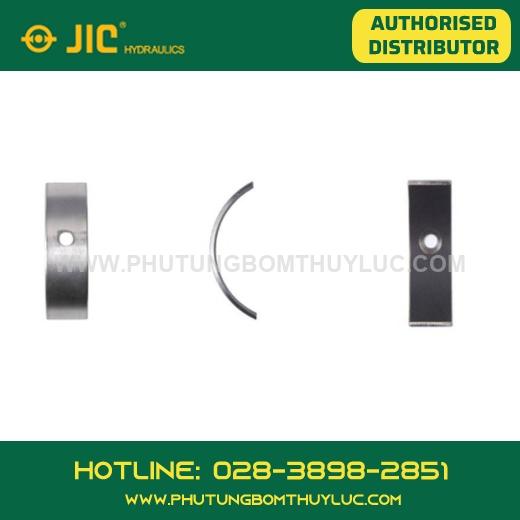 Kayaba (KYB) · PSVBushing – Kayaba PSVD2-17PSVD2On requestView · get a quote
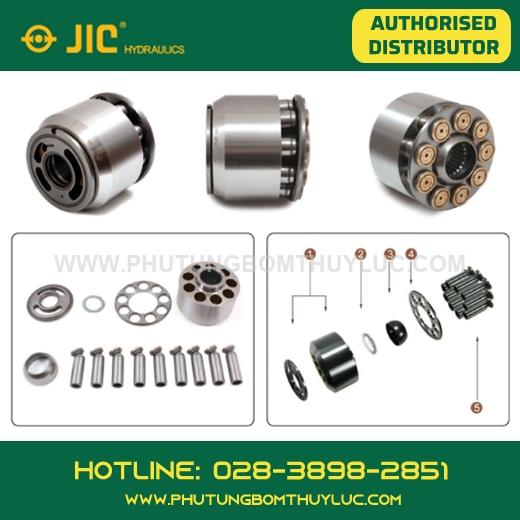 Kayaba (KYB) · PSVRotary group – Kayaba PSV2-55TPSV2On requestView · get a quote
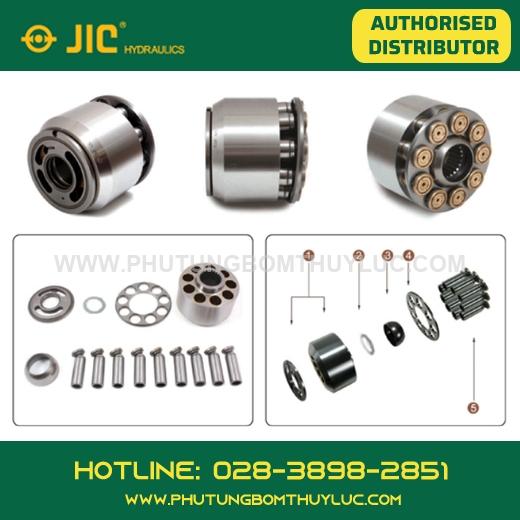 Kayaba (KYB) · PSVRotary group – Kayaba PSV2-60TPSV2On requestView · get a quote
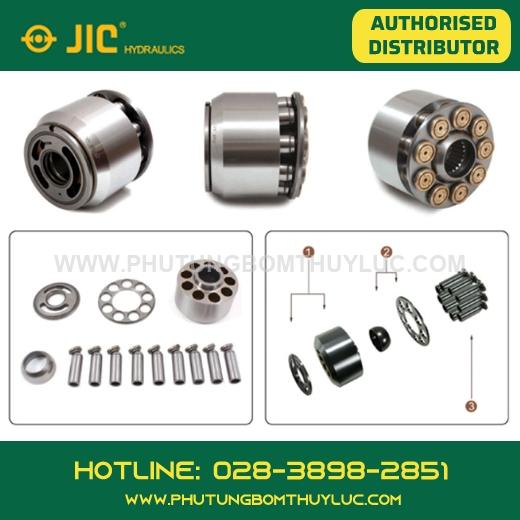 Kayaba (KYB) · PSVRotary group – Kayaba PSV2-63TPSV2On requestView · get a quote