Quick answer
The price of replacing cylinder seals is the sum of three main parts: the seal kit itself, the labour to open and reassemble the cylinder, and any rod inspection or repair needed. The figure shifts with machine age, pump family, cylinder condition, and where the seals come from. There is no fixed number for every machine, because each cylinder arrives at the workshop in a different state.
The price of replacing cylinder seals is not a fixed number. It is the sum of three main parts: the seal kit you fit, the labour to remove and reassemble the cylinder, and the rod inspection or repair if it is needed. When a technician quotes you a price for replacing cylinder seals, he is adding those parts up based on machine age, pump family, cylinder condition, and where the seals come from. Understanding each part tells you what you are paying for, and why two shops quote differently for the same job.
What Does the Price of Replacing Cylinder Seals Include?
Broken down, every seal job has three parts. First is materials: the seal kit and the small pieces that go with it, such as the head gasket, dust wiper, and guide rings. Second is labour: the time to pull the cylinder off the machine, open the head, fit the seals, and put it all back. Third is the variable part: inspecting the rod, dressing scratches, and cleaning the bore. These three add up to the final figure you hear. The tricky part is that the variable portion often stays unknown until the cylinder is opened, so a good quote states an allowance for the rod up front. Once you understand this split, you ask the right questions instead of only comparing the final number.
The Seal Kit Is the Clearest Cost
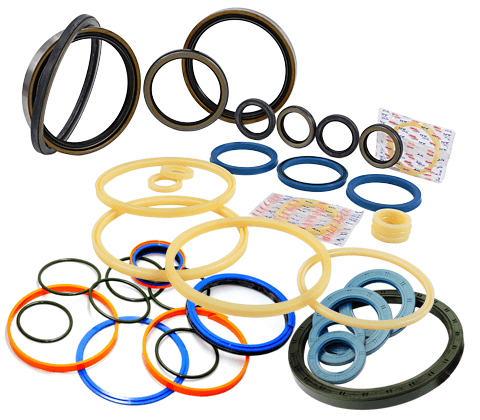
The seal kit is the easiest part to price because it is a concrete item. One kit holds several seal types for a cylinder: the piston seal, the rod seal, the dust wiper, and the back-up rings. The kit price depends on cylinder size, how rare the machine family is, and whether you choose genuine or aftermarket. You can look through the hydraulic seals available by machine family to picture this cost before you bring the machine in.
Why Do Quotes Differ for the Same Cylinder?
Many owners wonder why two shops quote two different figures for the same cylinder. The reason sits in the part of the quote you cannot see. One shop may bill the labour to drop the cylinder off the machine separately, while the other folds it into the price. The seal source also differs: a genuine full kit costs more than aftermarket pieces bought loose. Most of all, each shop judges the condition of your rod differently, which leads to a different variable charge.
Labour Is the Part People Underrate
Many people look only at the kit price and forget the labour. Pulling a small bucket cylinder is nothing like pulling a boom cylinder or an arm cylinder buried deep in the machine. Some need many pins removed, oil drained, and a crane to support the weight before the cylinder comes out. That time is labour cost, and it changes with where the cylinder sits on the machine. If you want to picture the real work, the guide on replacing cylinder seals walks through each step so you see why the labour is not light.
Rod Inspection Is the Common Add-On
This is the part that makes the first quote and the final invoice differ the most. Only when the cylinder is open can the technician see clearly whether the rod is still good or scored, pitted, or bent. If the rod is fine, fitting seals is all it takes. If it is lightly scored it must be polished; deep scoring or flaked plating means re-plating or a new rod, and that runs noticeably higher than a plain seal change.
Rod Plating and the Hidden Costs
The chrome plating on the rod is what keeps the seal from being cut. When the plating flakes or pits, a fresh seal wears out fast, and you pay to change it again. According to technical documentation from SKF, the surface finish and hardness of the rod decide seal life. That is why an honest shop tells you the plating condition before fitting new seals, instead of fitting them blindly and letting you come back in a few weeks.
How Do Genuine and Aftermarket Differ on Cost?
A genuine kit matched to the exact machine family usually costs more, but the sizes and materials fit correctly. Aftermarket is cheaper, with good grades and poor grades depending on the maker. For a machine that will run for years, many owners pick genuine for heavy-loaded cylinders and aftermarket for lighter positions. This choice moves the price directly, and no single option is right for every case.
How Does the Number of Seals in a Kit Matter?
Not every kit holds the same number of pieces. Large cylinders with several back-up stages have more pieces in the kit, so the materials cost more. Some machine families add anti-rotation rings and thicker guide rings, which makes a full kit dearer than a minimal one. When you compare two prices, ask exactly how many pieces each quoted kit holds, so you do not compare a full kit against a stripped one.
Machine Age and Pump Family Move the Price
Older machines or rare families have harder-to-find seals, and the price rises with that. Common pump families such as K3V and K5V usually have kits and parts on the shelf, so the cost is easier. Some special cylinders, by contrast, must be ordered, which is both slow and expensive. Machine age also decides whether the rod is still original or has been repaired several times, which affects the labour to sort it out.
The Cylinder Condition When It Reaches the Shop
A cylinder that only weeps oil is very different from one that has drifted badly and sprays oil out. If you leave it too long, dirty oil gets in and scores the bore, and the repair climbs. Bringing the machine in early, at the first sign, is usually cheaper than waiting for heavy damage. This is why technicians tell you to deal with a weep right away instead of pushing on.
Gaskets, Wipers, and the Small Pieces
Beyond the main seals, a proper job also renews the head gasket, the dust wiper, and the old back-up rings. These pieces are cheap, but skipping them makes it easy to leak again elsewhere. An experienced technician changes them all in one pass so you do not open the cylinder a second time. The cost of these small pieces usually sits inside a full kit already, so you do not need to price them separately.
Hydraulic Oil and Cleaning After the Job
After the seals are changed, the cylinder needs cleaning and a refill of the right oil. If the system has taken in sludge or water, it may need draining and an oil change, which is a separate charge. Oil is not always counted inside the seal price, so ask first. Careful cleaning helps the new kit last and avoids leaking right after the job. Clean oil also spares the other cylinders on the machine from wearing their seals over time, so it is a small charge that is worth doing properly.
Table of the Parts That Make Up the Price
The table below sums up the parts so you can check them against any quote.
| Item | What it covers | What moves it |
|---|---|---|
| Seal kit | Piston seal, rod seal, wiper, back-up rings | Cylinder size, genuine or aftermarket |
| Labour | Remove cylinder, open head, fit seals, refit | Cylinder position, pin difficulty |
| Rod inspection | Check scoring, polish, re-plate if needed | How damaged the rod is |
| Small pieces | Gaskets, guide rings, wipers | Number of pieces in the kit |
| Oil and cleaning | Flush sludge, refill correct oil | State of the old oil |
When Should You Replace the Whole Cylinder Instead?
There are cases where a seal change is no longer economical. If the bore has worn oval, the rod is badly bent, or the body is cracked, new seals will not hold pressure. The technician will then advise a major rebuild or a full cylinder, and you should listen to avoid repeat repairs. This decision depends on the specific condition and cannot be judged before opening it up.
Signs It Is Time to Replace the Seals
The clearest sign is oil weeping around the cylinder neck and a rod that is wet with oil as it moves in and out. A rod that slowly settles while holding a load, known as cylinder drift, is another sign the seals have gone soft. You may notice the machine getting slower, losing force in one direction, or using oil quickly. Catching it early and acting early is always cheaper than waiting until oil sprays out.
Do It Yourself or Bring It to a Shop?
For someone with the tools and a practised hand, an easy-position seal change can be done at home to save labour. But opening a cylinder needs the right tools and method, or you easily damage the rod or fit the seal crooked. One small mistake and it leaks again, doubling the work. If you are not sure of your hands, a shop is the safer choice for heavy-loaded cylinders.
How to Keep the Cost Reasonable
- Deal with it early at the first weep, before the rod gets badly scored.
- Ask exactly how many pieces the kit holds before comparing two prices.
- Choose a trusted seal source so you do not open the cylinder twice.
- Keep the hydraulic oil clean so the new seals last longer.
- Change all the small pieces together in one opening.
Do these few things and you avoid most of the cost that runs over budget.
Mistakes That Push the Cost Up
The most common mistake is pushing on while the machine already leaks. A rod that runs dry or picks up grit gets scored, turning a simple seal change into a costly re-plate. The second mistake is chasing very cheap seals of unknown origin that fail fast once fitted. Both make you pay twice for a job that should have been done once.
Warranty and the Origin of the Kit
A good seal kit comes with a clear origin and a warranty from the seller. When a seal has a material fault, you get a replacement instead of eating the cost. So the lowest price is not always the real cheapest, if you have to open the cylinder again in a few weeks. Choosing hydraulic seal parts with a clear source gives you more confidence on this point.
How Should You Ask for a Transparent Quote?
Many owners ask whether there is a standard price list. The straight answer is no, because every cylinder is in a different state and every machine runs a different pump. What you should ask for is an itemised quote: how much for materials, how much for labour, and what allowance is set for the rod. A clear quote lets you compare properly and avoids surprise charges.
Need Help Choosing a Kit for Your Machine?
If you are weighing a seal change and want to know the right kit for your machine family, look through the hydraulic seals catalogue by machine age. Tell us the pump family and cylinder position, and we will help you pick the right kit and estimate the parts to prepare. Deal with it early, choose the right source, and you save both money and downtime in the shop.
Key takeaways
- The seal replacement price is the sum of the kit, the labour, and the rod inspection.
- The rod repair is the common add-on, only clear once the cylinder is opened.
- Genuine kits last and fit better but cost more than aftermarket.
- Machine age, pump family, and cylinder condition all move the price.
- Acting early at the first weep is always cheaper than waiting for heavy damage.
- Ask for an itemised quote to compare properly and avoid surprise charges.
Written by
Hoàng Anh Dũng
Hoàng Anh Dũng tracks sourcing, pricing and brands for heavy-equipment parts. He writes about what drives price, buying smart and telling apart part origins and quality.
Related parts
The exact parts discussed above — send your machine model or pump code to match.