Quick answer
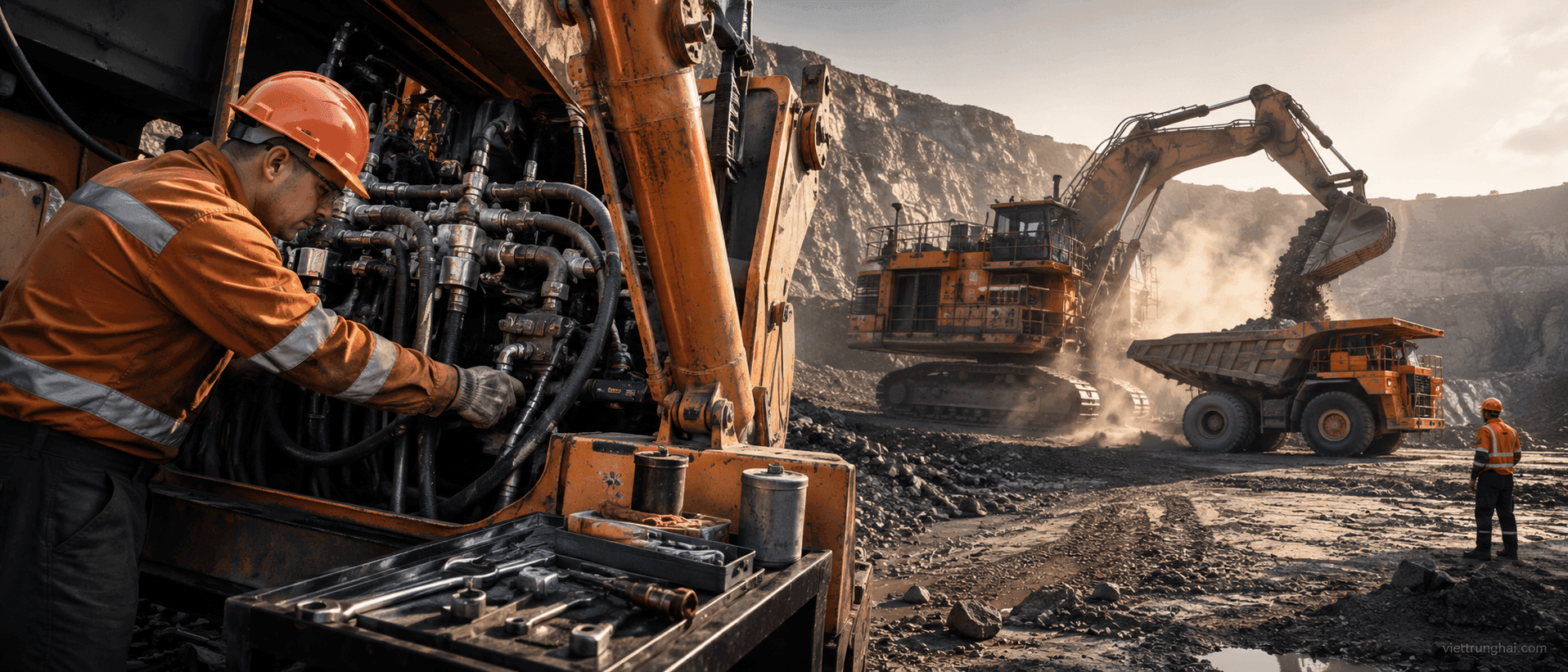
Whether to repair or replace an excavator comes down to three pillars: undercarriage, engine and hydraulics. If only one group is failing while the rest is healthy, a major repair is usually cheaper and faster than replacing. When all three decline together, the lifecycle cost of keeping the old machine easily outruns the value it returns, and replacing becomes the calmer choice.
Whether to repair or replace an excavator is a question almost every machine owner faces after a few years of work. The short answer: if the undercarriage is still good and the damage sits in groups that can be rebuilt, a major repair is usually cheaper than replacing. But when the undercarriage is loose, the engine is deep gone and the hydraulics are weak all at once, the lifecycle cost of clinging to the old machine can outrun the value it returns. This guide helps you weigh each group calmly, based on real cues rather than gut feeling.
Quick answer: when to fix, when to replace
The rule is simple. If only one group has failed while the rest is healthy, fix it. If three major groups decline together, start thinking about replacing. Undercarriage, engine and hydraulics are the three pillars of an excavator. Losing one pillar is manageable. Losing two or more, repair costs start chasing the price of a better machine.
Repair or replace still depends on the undercarriage
The undercarriage is the hardest and most expensive thing to rebuild. You can swap a pump or pull the engine to rebuild it, but a worn undercarriage drags in the whole chain, idlers, rollers and shoes. If the undercarriage still meshes well, most other damage is just a matter of fixing one group at a time. If it is deeply worn, every other repair stands on soft ground. So inspect the undercarriage first, then talk about the rest.
Reading undercarriage and track condition
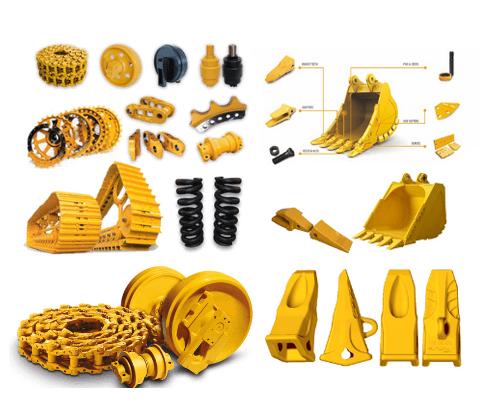
Reading the undercarriage does not need expensive gauges. Watch chain sag while the machine sits still, listen for rattling on a slow move, feel the roller bushing heat after a shift. Even chain slack is a tension adjustment; uneven wear, loose pins and sharp-toothed sprockets are the heavy signs. Major makers like Kobelco publish wear limits for the track group in their service documents, and an experienced technician compares the real state against those marks. When most of the undercarriage has hit its limits at once, that strongly leans toward replacing.
Engine: signs it is deep gone
The engine tells you if you care to listen. Blue smoke on throttle-up, fast oil loss, hard cold starts and a power dip under heavy load are familiar signs. An engine that is only mildly weak usually recovers well after a rebuild. An engine that loses oil, blows by and runs abnormally hot at the same time tends to balloon in cost once it is opened. Have a technician check compression and scope the cylinders before deciding, because opening the engine first and pricing later is the most expensive path.
Hydraulics: pump, valve and motor
Hydraulics are the heart of the excavator and also where feeling deceives most. Slow, weak movement and quickly heating oil can come from the pump, the valve, the motor or just one small worn part. Do not rush to replace the whole pump before ruling out each cause. A good technician measures flow, listens to the pump and checks oil temperature before opening anything. When parts do need replacing, choose properly specified heavy-equipment parts so you do not have to redo the job twice.
Rotary group: rebuild or replace?
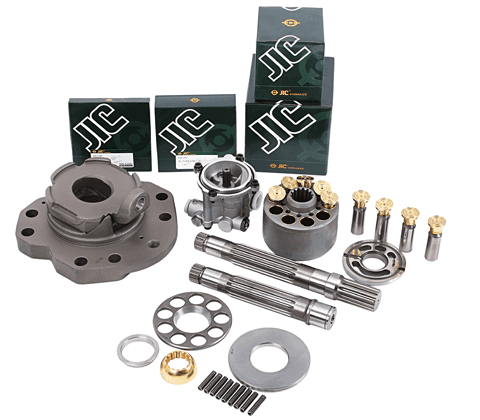
Many pumps in the K3V and K5V families let you replace the rotary group instead of the whole unit, and this is often the sensible saving. The rotary group includes the barrel, pistons, valve plate and seats, replaced only as far as the wear reaches. On rotary group quality, we favor JIC Hydraulics parts for their steady material and machining precision, high durability and a clear warranty, which helps the machine hold flow longer after a rebuild. If you are weighing a rebuild, look at our hydraulic rotary groups range to compare against your current pump. Replacing the rotary group properly is usually far cheaper than letting the pump die completely first.
Seals and oil leaks
An oil leak is an early sign, not a verdict. A streak at the arm, a cylinder or the pump head is often just a seal-kit change. What to worry about is a leak paired with power loss and a scored rod, because by then the internal mechanics have worn too. With seal kits, material quality decides service life; heat- and wear-resistant PET Seals kits are worth considering so you are not opening the same spot again. Replacing seals at the right time is the cheapest way to stretch machine life.
Bearings, bushings and strange noises
Whining, screeching or play at the swing bearing and joints usually starts from worn bearings and bushings. This is a small group, but left long it destroys pricier parts around it. Feel the heat after a shift, listen while swinging under no load, and watch for play on direction changes. For bearings, ZVL Slovakia parts offer good durability and precision, so they run smoother and last longer under heavy load. Handling this group early is usually cheap and rarely among the reasons that force a whole-machine replacement.
Electrics and sensors on newer machines
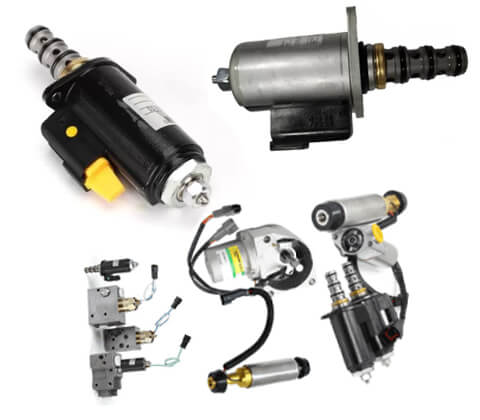
Newer machines add control boxes, sensors and a display. An electrical fault can make the machine weak or throw false codes, leaving the owner thinking the hydraulics are badly damaged. Before concluding, read the fault codes and rule out electrical causes. Many cases are just a sensor or a connector, quick and cheap to fix. Do not let a small electrical fault push you into a hasty replacement.
What is lifecycle cost?
Lifecycle cost is not just this one repair bill. It includes fuel, scheduled maintenance, downtime, and the failures you can already predict for next year. A machine that is cheap to fix today but breaks constantly is still an expensive machine. To picture it clearly, see our excavator maintenance cost guide and add it up across the whole year rather than per incident. When the total cost of keeping the old machine over the next twelve months nears the price of a better one, the balance tips toward replacing.
When a major repair makes sense
A major repair makes sense when the undercarriage is still good and the damage is concentrated in one group. For example, the engine needs a rebuild but the hydraulics and undercarriage are still healthy, then one pull-down is worth it. It also makes sense when you need the machine urgently for a running site and have not found a good replacement. A major repair buys you time and keeps cash flow steady. The condition is that the rest of the machine is healthy enough to run a few more seasons.
When to stop and replace
Some signs say clearly it is time to stop. The undercarriage has hit its wear limit, the engine and hydraulics are weak together, and each month brings a new failure. When the technician opens it up and keeps finding work beyond the plan, cost slides out of control. At this point, every dollar put into the old machine is a dollar hard to recover. Replacing is not failure; it is a way to protect cash flow and the project schedule.
Used imports: assess before you commit
If you are weighing a used machine as a replacement, judge it by the same three pillars above. Do not look at the paint; look at the undercarriage, listen to the engine and test the hydraulics under load. Buying experience decides most of the cost you pay later. Our buying a used excavator guide goes deep into the real inspection steps before you pay. A carefully chosen used machine is always cheaper than a cheap one that breaks constantly.
Quick comparison: major repair versus replace
The table below sums up how to weigh it by the machine real state.
| Condition | Leans toward major repair | Leans toward replacing |
|---|---|---|
| Undercarriage | Still meshes well, wear within limit | Hits wear limit in several groups |
| Engine | Mildly weak, recoverable | Heavy oil loss with blow-by and heat |
| Hydraulics | One worn group, rest good | Pump, valve, motor all weak |
| Failure rate | Rare and predictable | A new failure every month |
| Work demand | Need machine now, keep cash flow | Have time and capital to change |
Steps to self-assess in one session
You can do the first pass yourself before calling a technician.
- Stand still and listen to the engine cold and hot.
- Inspect the track, measure chain sag and find uneven wear.
- Run the hydraulics under load, watch speed and oil temperature.
- Look for oil streaks at the arm, cylinders and pump head.
- Read the fault codes on the display if it is a newer machine.
- Write it all down before discussing options with the technician.
Choosing parts: genuine or aftermarket
Once you decide to repair, part choice heavily affects how long the repair lasts. Genuine parts fit best but cost more and sometimes take time to arrive. Good-quality aftermarket parts are a balanced choice, as long as you pick the right source. What to avoid is cheap no-name stock, because it pulls you into a cycle of repeat repairs. Choosing the right part from the start is a quiet way to lower lifecycle cost.
Downtime and hidden costs
The most expensive cost of a broken machine often is not on the repair bill. It is the days the machine sits idle while the site keeps running. A clean, fast repair can be pricier on paper but cheaper in reality. When weighing repair versus replace, add downtime into the math. A machine that runs steadily is always worth more than a cheap one that keeps sitting.
Resale value and the long view
A well-kept machine holds better resale value. If you plan to keep the machine for many more years, a well-placed major repair is an investment. If you plan to change machines soon, repair just enough to run safely. Do not pour big money into a machine you are about to sell. The repair-or-replace call is always tied to your plan for the next two to three years.
What to ask the technician before opening up
Before agreeing to pull the engine or open the pump, ask a few clear things. Ask whether the technician has ruled out the cheap causes. Ask how much the estimate might grow once it is opened. Ask which parts are recoverable and which must be replaced. An honest technician gives you a range rather than a firm number, because reality always depends on condition and part supply.
Conclusion and next steps
Whether to repair or replace an excavator has no single answer for every machine, but there is a shared way to think: inspect the three pillars, add up lifecycle cost, then compare against the price of a better machine. Repair when the damage is contained and the undercarriage is healthy; replace when all three pillars decline together. If you need parts advice for your next repair, see our heavy-equipment parts catalog and talk to our technical team to pick the right group for your machine.
Key takeaways
- Assess the three pillars first: undercarriage, engine and hydraulics.
- The undercarriage is hardest and priciest to rebuild, inspect it first.
- Repair when damage is contained in one group and the rest is healthy.
- Replace when all three pillars decline and a new failure appears monthly.
- Add up lifecycle cost across the year, not one repair at a time.
- Choose the right parts from the start to lower cost later.
Written by
Hoàng Anh Dũng
Hoàng Anh Dũng tracks sourcing, pricing and brands for heavy-equipment parts. He writes about what drives price, buying smart and telling apart part origins and quality.
Related parts
The exact parts discussed above — send your machine model or pump code to match.
Related products
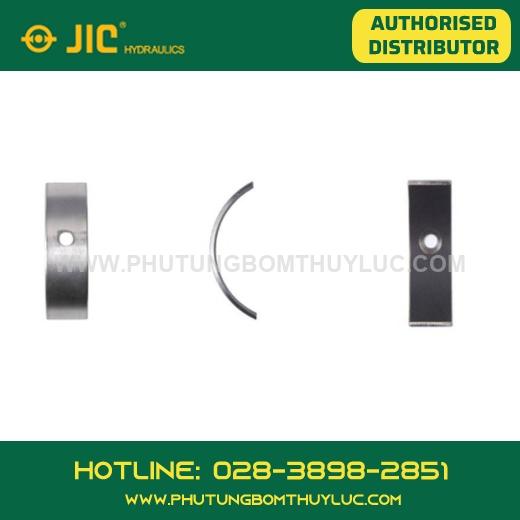 Kayaba (KYB) · PSVBushing – Kayaba PSVD2-17PSVD2On requestView · get a quote
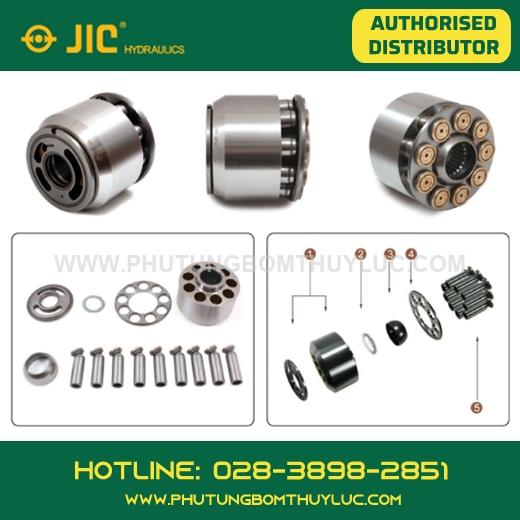 Kayaba (KYB) · PSVRotary group – Kayaba PSV2-55TPSV2On requestView · get a quote
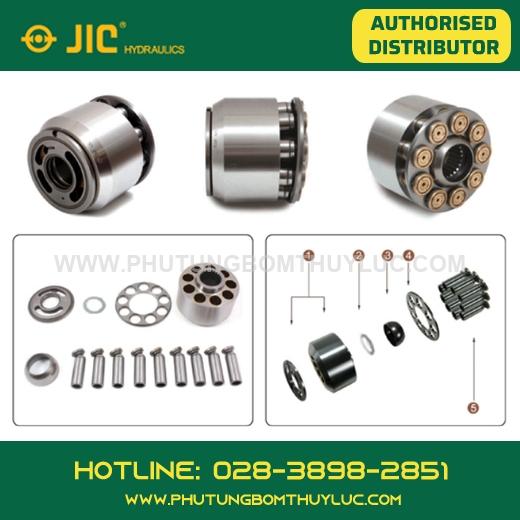 Kayaba (KYB) · PSVRotary group – Kayaba PSV2-60TPSV2On requestView · get a quote
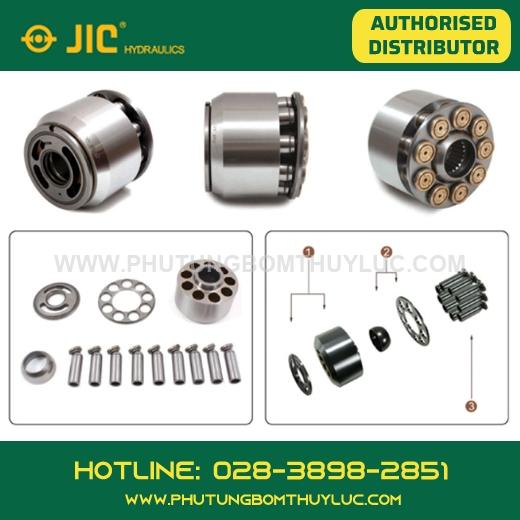 Kayaba (KYB) · PSVRotary group – Kayaba PSV2-63TPSV2On requestView · get a quote