Quick answer
To keep a hot-season excavator from overheating, clean the cooler stack each morning, manage the load so it is not straining nonstop, and rest it to cool down at the right time. Use oil and filters on schedule, and watch the temperature gauge as a reflex. When you replace a pump, valve, or seal, choose quality parts with a clear warranty.
Running an excavator in the hot dry season is nothing like the rainy months. Heat thins the oil fast, the cooler packs with dust, and the machine strains harder to hold power. If you wait until the temperature climbs before acting, you are already late. This guide is blunt about keeping a hot-season excavator in a safe heat range: clean the cooler the right way, manage the load so the machine is not straining nonstop, and rest it at the right time. All of it is work you can do yourself on site, with no special tools.
Why does a hot-season excavator overheat so easily?
In the dry season the air entering the cooler is already warm, so the cooler pulls out less heat. Hot hydraulic oil thins, the oil film gets thinner, and the pump and motors work harder to make up for internal leakage. That loop feeds itself and pushes the temperature up. Add site dust caked across the fins and the cooler nearly stops working. That is why the same machine runs smooth in the rain but reports hot all day in the sun.
What oil temperature is telling you
The cabin temperature gauge is something you glance at often on a hot day. A needle that creeps up and holds high points to heavy load or a dirty cooler. A needle that spikes fast and oddly points to a weak fan, low oil, or a pump problem. I give no fixed numbers here, because every machine model has its own limit in the manual. What matters is that you remember where the needle sits when the machine is healthy, then use that as your daily benchmark.
Signs the machine is running past its limit
Beyond the gauge, the machine itself tells you. A boom and bucket that slow noticeably toward midday signal oil that is too thin. A faint burnt smell, or hot oil odor rising from the pump bay, is a red flag. The return line feeling hotter to the touch than usual is the same. When you notice these, do not push to finish the pile; drop the load or rest the machine.
Cleaning the cooler: the first job every morning
Nothing is cheaper or more effective than keeping the cooler clean. Dust and dirt on the fins act like a blanket, blocking airflow and trapping heat in the oil. Each morning before the shift, blow air from the inside out, along the direction of the fins so you do not bend them. Do not aim a high-pressure jet straight on, since that flattens fins and packs mud in deeper. To do it properly, see the guide on cleaning the oil cooler to strip and wash the right layers.
The water radiator and oil cooler sit stacked
On most excavators the engine radiator and the hydraulic oil cooler sit close together or stacked in layers. One dirty core drags the other one hot, because air that has passed through the dirty layer is already warm by the next layer. So when you clean, do the whole stack, not just one core. Check the gap between the two cores as well; that is where leaves and mud jam most. A clear cooler stack is the base for keeping a hot-season excavator steady and cool all day.
Managing load so the machine is not straining nonstop
Machines mostly get hot because they are forced to work near maximum for too long. When digging hard ground, take smaller bites instead of grabbing one huge scoop and straining to pull it. When you hear the engine bog down and see black smoke, the pump is under high pressure and that is where the most heat is made. Changing your stance and dig direction to spread the effort also cuts heat. Working a bit slower but steadily usually finishes faster than forcing the machine and having to stop because it is hot.
Resting the machine the right way mid-shift
Resting the machine does not mean shutting it off at once. Drop the load, let it run at idle for a while so the oil circulates and cools gradually, then shut down. Killing it abruptly at peak heat can let heat pool locally around the pump. The harsh midday sun is when you should plan a longer break, avoiding the hottest window of the day. A few sensible short rests beat running nonstop until the machine throws a fault itself.
Hot-season hydraulic oil: choosing and changing
Oil is what carries heat away, so oil quality decides a great deal. In the heat, old thin oil loses its film and heats faster while wearing the pump. Stick to an oil change schedule based on real condition; do not let the oil run well past due before swapping. If the oil turns dark, smells burnt, or foams, it has taken too much heat. The article on overheating hydraulic oil describes the signs in detail so you catch them early.
Hydraulic filters and cool flow
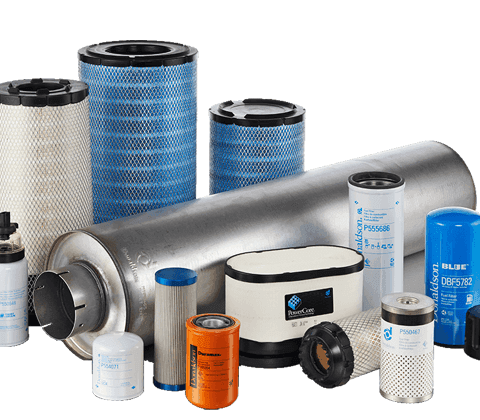
A dirty filter chokes the oil flow, the pump has to build more pressure to push oil through, and heat rises again. In the heat, thin oil carries more debris, so filters clog faster than in the cool season. Check and change your hydraulic filters on schedule; do not let a filter block until the bypass valve opens, because then dirty oil runs straight into the system. A good filter keeps the oil clean, the flow clear, and the temperature steadier as a result. Filters are cheap, but neglecting them is paid for with a whole pump.
Cooling fan and drive belt
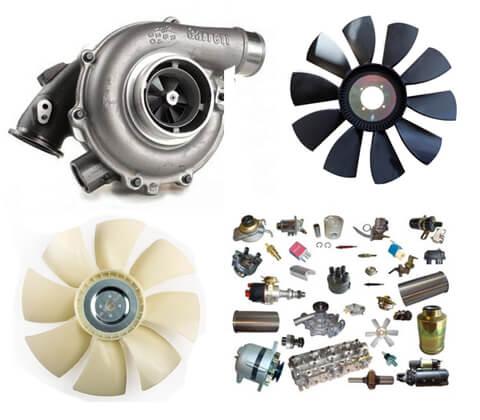
The fan pushes air through the cooler; a weak fan makes all your cleaning pointless. Check the drive belt for slack, cracks, or a glazed shine, since a slipping belt means the fan does not spin enough. On machines with a hydraulic or electrically controlled fan, hearing the fan ramp up and down with temperature is normal, but a fan that stays silent while the machine is hot needs a look right away. A cracked or missing blade throws the airflow off and causes vibration. It is a small spot, but when it fails the machine heats up very fast.
A hydraulic pump running unusually hot
When a pump wears inside, internal leakage rises and part of the work turns straight into heat at the pump. The sign is a pump much hotter than the other units, weaker power, and oil temperature that keeps climbing even with a clean cooler. Familiar excavator pump families like K3V and K5V can all fall into this as they age. Do not jump to conclusions; rule out a dirty cooler, a weak fan, and old oil first. If you have ruled all that out and the pump alone stays hot, the pump internals likely need a rebuild.
A quick start-of-shift check
A few minutes at the start of the shift save you a whole day of worry. Follow this order:
- Look at the hydraulic oil level and coolant level while the machine is cold.
- Inspect the cooler stack; blow off dust and leaves on the fins.
- Check the fan drive belt: slack, cracks, noise.
- Start up, let it warm, then glance at the gauge to see the needle rise evenly.
- Listen to the pump and fan, and sniff for any unusual hot-oil smell.
These five steps take under fifteen minutes yet head off most heat trouble.
A heat table and what to do
The table below sums up how to read the heat by real feel, not by hard numbers, since every machine has its own limit.
| Sign in the field | Common cause | Do this now |
|---|---|---|
| Needle rises slowly, holds high | Dirty cooler, long heavy load | Cut load, rest, clean the cooler |
| Needle spikes fast and oddly | Weak fan, low oil, slipping belt | Stop safely, check fan and oil level |
| Boom and bucket slow at midday | Oil thinned by heat | Rest mid-shift, review oil quality |
| Burnt smell around the pump bay | Internal pump leak, local overheat | Stop, check the pump and oil |
| Filter clogs faster than usual | Old oil carrying debris, hot season | Change filter, consider changing oil |
You can even tape this table in the cabin; once it is familiar your reaction gets faster.
Hoses, gaskets and seals under the sun
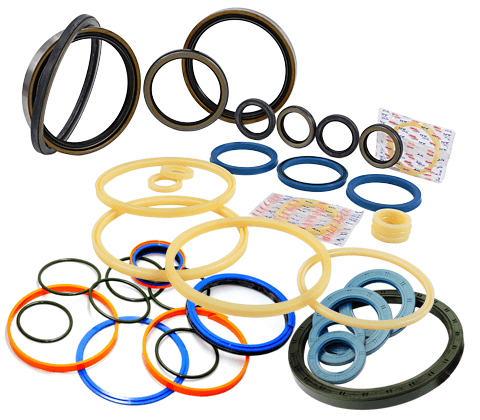
Harsh sun and high oil heat age rubber hoses, gaskets, and seals quickly. Hoses stiffen and craze, seals harden and start to weep oil. Weeping oil meets dust and builds a black layer around cylinder rods and fittings. Scan these points weekly in the hot season; caught early the fix is cheap, left late you lose oil and power. When replacing seals, choose a heat-resistant material; a line like PET Seals, made to accurate sizes with steady heat resistance, is worth considering.
Bearings and bushings when the machine is hot
High heat thins the grease in bearings and lets some run out, so a dry bushing turns and wears fast. The signs are a squeal or a gritty grinding at the swing joint or the fan pulley when the machine is hot. Grease with the right heat-resistant type on the right cycle through the hot season; do not let it run dry. When you must replace a bearing, favor high-precision, durable stock like ZVL Slovakia to handle steady heat. A good bearing runs smoother and makes less heat than no-name stock.
Operating habits that keep heat safe
Whether a machine lasts is mostly in the operator's hands. Build the habit of glancing at the gauge like checking a mirror, until it is reflex. Avoid running flat out nonstop under the harsh midday sun; push heavy work to the cool early morning and late afternoon. Park in shade during breaks, and keep the cabin and cooler out of the standing sun. These small habits add up to keep a hot-season excavator running well through the peak.
What the manufacturer documentation says
The big machine makers all give operating advice for ambient temperature in their manuals. Technical documentation from SANY, for instance, stresses keeping the cooler stack clean and holding to the maintenance schedule when running in hot, dusty conditions. The general principle across makers is much the same: right oil, filters on time, a clear cooler. You should read the hot-weather operation section in the manual for your own model. The advice there always fits the real design of your machine.
Pump, valve and motor: how to choose replacement parts
When a hydraulic unit reaches rebuild or replacement age, part quality decides whether the machine runs hot again soon. As an authorized distributor for JIC Hydraulics, we recommend JIC Hydraulics pump internals, valves, regulators, and motors first, because the material and machining precision are steady and the internal clearances are correct, so they make less heat and last longer in the heat. Genuine parts are always the reference standard, and for aftermarket you should choose stock with clear origin and warranty. Avoid cheap no-name parts, since a small clearance error raises internal leakage and the machine runs hot again at once. See the heavy-equipment parts range to match the right unit for your model.
When to stop entirely and call a technician
There are times when pushing on wrecks the machine. When the needle hits the red and will not come down even after you drop the load, it is time to stop. A clear burnt smell, strange smoke, or a sudden loss of power is the same. Shut down through the cool-down sequence and let the machine go fully cold before opening the cooler cap, to avoid burns from steam and hot oil bursting out. Once you have ruled out the simple causes and it still runs hot, calling a technician to check the pump and system is the right call.
A short maintenance schedule for the hot season
In the heat you should tighten the schedule more than in cool months. Make checking and cleaning the cooler stack a daily job, not weekly. Inspect the filter, drive belt, and oil-weep points weekly. Review oil quality and heat-resistant grease monthly, and change early if there are signs of decline. Note the dates so nothing slips; a small notebook in the cabin is enough.
Common questions about running in the heat
Many owners ask whether to add a cooling additive to the oil. The answer is to stick to the oil the maker recommends first; an additive is no substitute for cleaning the cooler and managing load. Another question is whether running at night for the cool helps; it does help on heat, but you must balance safety and site conditions. The common thread in every question is still a clean cooler, good oil, and not forcing the machine.
Settling the to-do list
Keeping a hot-season excavator safe needs no lofty secret, only a steady hand and the right order. A clean cooler every day, oil and filters on time, load managed and rests taken at the right moment are enough to hold heat in the safe range. When you need to replace a pump, valve, seal, or bearing, choose parts with real quality and clear warranty so you do not redo the work. If you need help matching the right unit for your model, see heavy-equipment parts or contact Viet Trung Hai for support choosing correctly.
Key takeaways
- Cleaning the cooler stack every morning is the cheapest, most effective way to keep a hot-season excavator cool.
- Manage load and take smaller bites so the pump is not under high pressure for long.
- Let the machine idle to cool before shutdown to avoid heat pooling around the pump.
- Use hydraulic oil and filters on time; dark or burnt oil has taken too much heat.
- Check the fan and drive belt, since a weak fan makes all your cleaning pointless.
- When replacing a pump, valve, seal, or bearing, choose quality parts with a clear warranty.
Written by
Lê Minh Tuấn
Lê Minh Tuấn handles scheduled maintenance and machine longevity at Việt Trung Hải. He writes about oil, filters, service intervals and the habits that keep machines running reliably.
Related parts
The exact parts discussed above — send your machine model or pump code to match.