Quick answer
Construction machines are heavy mechanized equipment such as excavators, bulldozers, road rollers and crawler cranes, used to dig, push, lift and compact material on the jobsite. Although their shapes and jobs differ, almost all of them rely on a hydraulic system to produce heavy working force. Understanding this shared trait helps an owner diagnose faults faster and choose the right parts from the start.
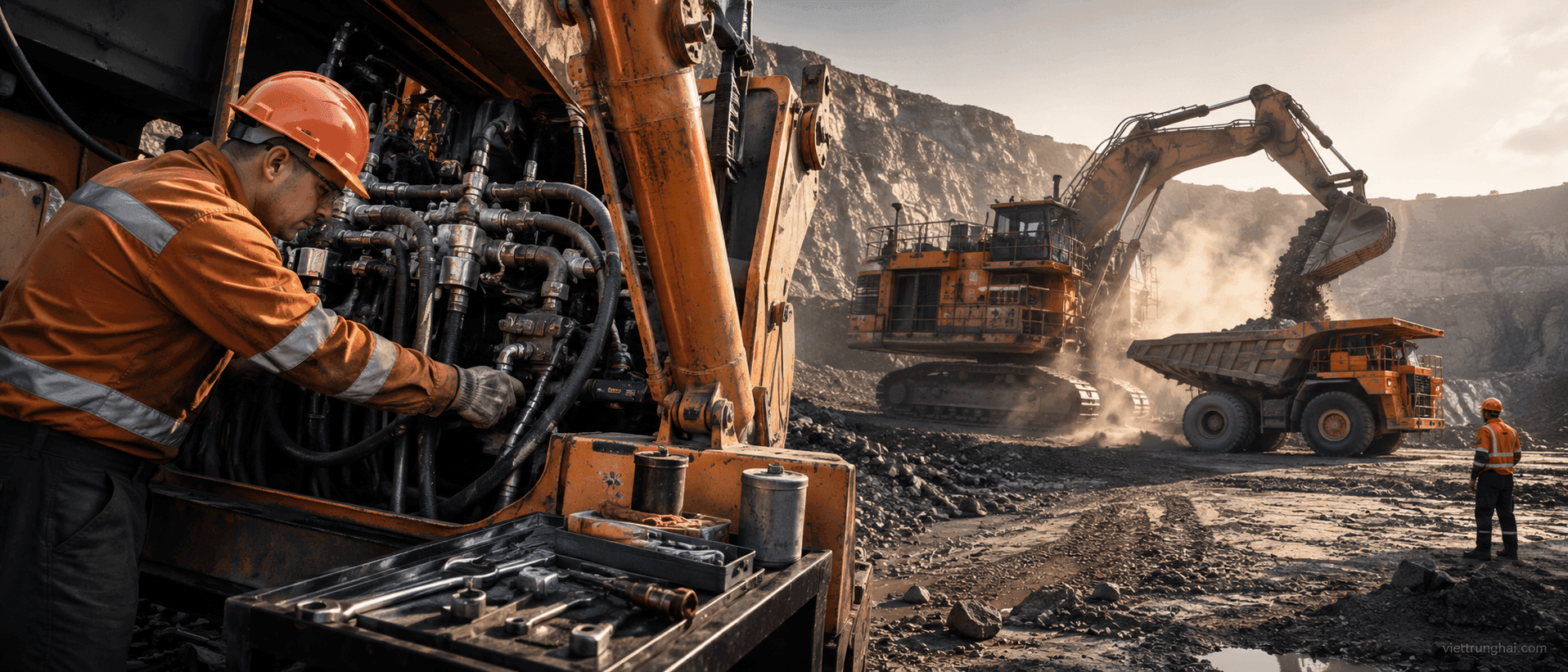
Construction machines are heavy mechanized equipment used to dig, push, lift, compact and move material on the jobsite. Excavators, bulldozers, road rollers, crawler cranes and wheel loaders look very different from one another, yet they share one core trait: almost all of them rely on a hydraulic system to produce heavy working force. Understanding this shared trait helps an owner diagnose faults faster and pick the right parts from the start.
What construction machines are and why they all need hydraulics
Construction machines exist to do the heavy work that human muscle cannot handle. They dig hard ground, push large volumes, lift heavy loads and compact roadbeds. To do that, a machine needs a way to transmit force that is both strong and smooth. That is why a hydraulic system sits on nearly every type of machine: pressurized oil carries force from the engine to the bucket, blade or drum in a smooth, controllable way.
The excavator: the most versatile machine on site
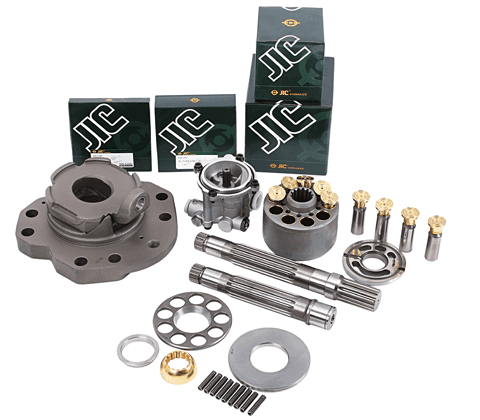
The excavator is the most common and most flexible machine. One machine can dig foundations, load soil onto trucks, break concrete, or carry a hammer attachment to break rock. That versatility comes from a boom and arm group driven entirely by hydraulics. When the operator pulls a control lever, high-pressure oil drives the cylinders, and an arm weighing several tons moves exactly as intended. For an owner looking at aftermarket parts, the pump and valve group deserves the closest attention, and the right hydraulic-pump parts decide whether the machine stays strong or weak.
How the hydraulic pump on an excavator works
The heart of an excavator is its hydraulic pump group, often a swash-plate piston pump from families such as K3V or K5V on many familiar models. The pump draws oil and pushes it out at enough pressure to overcome the load while digging. When the pump is healthy, the machine responds decisively and the bucket moves cleanly. When the pump starts wearing, the machine slows and loses force under heavy lifts, which is a signal to check early rather than force the machine to keep working.
The bulldozer and pushing force from hydraulics
A bulldozer uses a large front blade to push soil, level ground and strip vegetation. That blade is raised, lowered and tilted by strong hydraulic cylinders. The dozer gets its pushing force from the engine and the track drive, but the ability to control the blade precisely lives in the hydraulic system. If a blade cylinder leaks, the blade drops while it should hold, and the operator feels it immediately as a loss of firmness.
The road roller and how hydraulics drive the drum
A road roller compacts soil and pavement so the work lasts over time. On many vibratory rollers, a hydraulic motor drives an eccentric shaft inside the drum to create the vibration. The roller steering and travel systems are usually hydraulic as well. When the vibration motor weakens, compaction becomes uneven and the road is prone to settling later, so this part needs close watching on a roller.
The crawler crane and the problem of heavy lifting
A crawler crane lifts and moves very heavy loads, usually on bridge, road and high-rise projects. The slew, boom hoist and winch mechanisms all rely heavily on hydraulics to be both strong and smooth. A jerky motion while lifting a heavy load is dangerous, so the control valves must respond precisely. On this machine, the safety of the whole crew depends directly on the health of the hydraulic system.
The motor grader and blade precision
A motor grader creates flat road surfaces at the correct grade, usually in the finishing stage. The long blade in the middle of the machine is raised, rotated and tilted by several hydraulic cylinders at once. The accuracy of the surface depends on how steadily these cylinders hold the blade. A single cylinder leaking internally will leave a wavy surface, and the operator must constantly trim by hand to compensate.
How a wheel loader differs from an excavator
A wheel loader uses a large front bucket to scoop and dump loose material like sand, gravel and coal. Unlike a digging excavator, it moves quickly on rubber tires and works by scooping then carrying a short distance. The lift and tilt mechanisms are hydraulic, so control response decides productivity. Owners looking for aftermarket parts for this class can look at the heavy-equipment parts range matched to the exact year and model.
The wheeled excavator for urban projects
A wheeled excavator resembles a digging excavator but runs on tires instead of tracks. It moves flexibly on paved roads, which suits city projects where space is tight and travel between points is needed. The upper working group is still the familiar hydraulic boom and arm. The difference lies in the outrigger and travel systems, but the core principle of force transmission is still high-pressure oil.
Why are hydraulics the heart of every construction machine?
The answer lies in the nature of heavy work. Hydraulics let a small flow of oil create very large force, yet stay easy to control with a light lever. That lets one operator move an arm weighing several tons gently and precisely. No other system is at once compact, strong and smooth like hydraulics, so it became the shared choice for nearly every construction machine.
Pumps, valves, cylinders and motors: the four main groups
However different the machines are, a hydraulic system revolves around four groups of parts. The pump creates the high-pressure oil flow. Valves distribute and regulate that flow according to the operator commands. Cylinders turn pressure into straight motion, while motors turn it into rotary motion. Knowing these four groups helps you talk to the mechanic on point and find the right heavy-equipment parts group when a replacement is needed.
Hydraulic oil and why it matters more than you think
Hydraulic oil does more than transmit force; it lubricates, cools and carries metal particles back to the filter. Dirty oil or the wrong grade is a silent cause of pump and valve failure. When oil grows too old, it loses its lubricating ability and the internal surfaces of the pump wear faster. Changing oil and filters on time is the cheapest job that protects the most expensive parts.
A quick comparison of construction machine types
The table below summarizes the main job and the hydraulic role on each common type of construction machine.
| Machine type | Main job | Hydraulic role |
|---|---|---|
| Excavator | Dig, scoop, break | Drives boom, arm, slew |
| Bulldozer | Push soil, level | Raise, lower, tilt blade |
| Road roller | Compact roadbed | Drives vibration drum, steering |
| Crawler crane | Lift heavy loads | Slew, boom hoist, winch |
| Wheel loader | Scoop, carry loose material | Lift and tilt front bucket |
Signs that a hydraulic system is starting to fail
A machine usually warns you before it fails, if you pay attention. Slower motion, loss of force under heavy lifts, or a bucket that drifts down while holding are familiar signs. Oil heating up faster than usual, plus a whine or growl near the pump, is also worrying. When several signs appear together, stop and check rather than force the machine, because a small fault left alone usually drags a big one behind it.
Heat, noise and the signals a machine gives
A good mechanic reads a machine by ear, hand and nose before reaching for a gauge. A healthy pump runs with an even note, while a worn pump often growls under load. Oil that is too hot makes the pump housing burn to the touch, and that is the time to recheck the filter and oil level. A faint burnt smell from overheated oil is a signal not to ignore, because heat is the silent enemy of every hydraulic system.
Genuine versus aftermarket: how to choose
For an owner, the eternal question is whether to use genuine or aftermarket parts. Genuine parts give the best durability and fit, but they cost noticeably more and sometimes require waiting for supply. Good-quality aftermarket parts can be a sensible choice for many components, as long as you buy from a trusted source. Parts prices vary with the machine year, condition and supply, so compare carefully rather than chasing only the cheapest number.
Scheduled maintenance keeps a machine alive
No hydraulic system lasts if it is neglected. Checking for leaks, changing oil and filters on time, and keeping the cooler clean are basic jobs that decide a machine lifespan. A clear maintenance plan keeps you from missing key intervals and helps you catch faults early. You can refer to the excavator maintenance schedule to build a plan for your own fleet.
Lessons for buying a used machine
Buying a used machine is a gamble if you do not know where to look. With construction machines, the part to inspect most closely is always the hydraulic system: check for leaks, run heavy-load tests, listen to the pump and feel how decisive the motions are. A drifting bucket, a slow boom or pitch-black oil are signs to weigh carefully against the price. The guide on buying a used excavator goes deeper into how to inspect before you pay.
Choosing the right hydraulic parts for each machine
Every machine class has its own pump, valve and cylinder group, so parts cannot be swapped carelessly. When a replacement is needed, identify the exact year, model and group code to find the right component. Common pump families such as K3V and K5V have many variants, and picking the wrong variant makes the machine run with the wrong force. Describing the condition and symptoms clearly to the seller helps you get advised toward the right parts group from the start.
Technical standards and manufacturer documentation
Every manufacturer has its own technical documentation for each machine, from maintenance intervals to operating specifications. Cross-checking against the technical documentation of SANY or your own machine brand is the surest way to do things right instead of by habit. This documentation states the oil grade, the filter change interval and the standard checks for each model. Staying with the maker guidance keeps the machine durable and holds its value well at resale.
Safety when working with hydraulic systems
Hydraulic systems work at very high pressure, so safety must come first. Never search for a leak with a bare hand, because a high-pressure jet of oil can pierce the skin. Always lower the load fully and release pressure before removing a hose or cylinder. These are basic rules any mechanic must know before touching a hydraulic system.
Where to start for your fleet
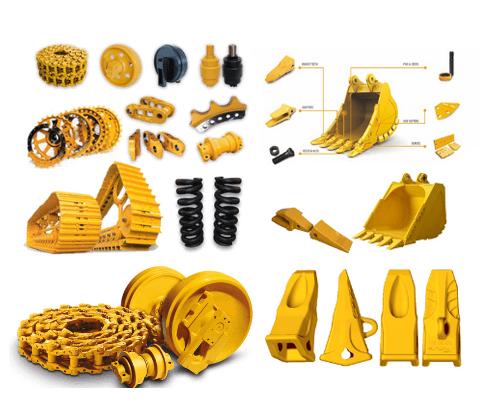
If you run several construction machines, start by knowing the hydraulic system of each one and building a shared maintenance plan. When replacements are needed, choosing a reliable parts source saves time and money in the long run. You can browse the heavy-equipment parts range to find the right component for each machine, or reach out for advice matched to your exact machine year and real-world symptoms.
Key takeaways
- Construction machines include excavators, bulldozers, rollers, crawler cranes and more, yet all rely on hydraulics.
- Hydraulics let a small flow of oil create very large force while staying easy to control by hand.
- Pumps, valves, cylinders and motors are the four core groups of every hydraulic system.
- The right hydraulic oil changed on time is a cheap job that protects the most expensive parts.
- A machine warns before it fails through noise, heat and loss of force, so pay attention early.
- Choosing parts by machine year and model matters more than chasing the cheapest price.
Written by
Phạm Đức Thắng
Phạm Đức Thắng focuses on the undercarriage, tracks and the travel and swing systems of excavators. He writes about how these systems are built, travel and swing motors, and protecting the undercarriage from wear.
Related parts
The exact parts discussed above — send your machine model or pump code to match.