Quick answer
A cylinder seal kit price is never a fixed number. It depends on the machine and pump or cylinder model, where the parts come from, whether you buy a full kit or single pieces, the brand and the material quality. To get an accurate quote, tell the seller the exact machine, its year, and which cylinder needs sealing.
A cylinder seal kit price is never a fixed number, because it depends on the machine year, the pump or cylinder model, where the parts come from, and whether you buy a full kit or single pieces. For the same cylinder bore, an aftermarket kit and a genuine kit can differ by a fair margin. This article breaks down each factor behind the price, so that when a quote lands in your hands you know what you are paying for, and how to ask so the quote actually means something.
What does a cylinder seal kit price depend on first?
Before talking money, a technician always asks three things: which machine, which year, cylinder or pump. Those three answers pin down the seal sizes and how many seals sit in one kit. Only once you know how many pieces and what sizes does a cylinder seal kit price take shape. Without these three facts, any quote is just guessing.
Machine year and model decide the most
An old crane cylinder and a newer stick cylinder have completely different seal builds. The number of seal rings, the rod size and the bore size all change with the year. The more common a machine is in Vietnam, the more stock there is and the friendlier the price. A rare, odd-year machine that must be special-ordered pushes both wait time and price up.
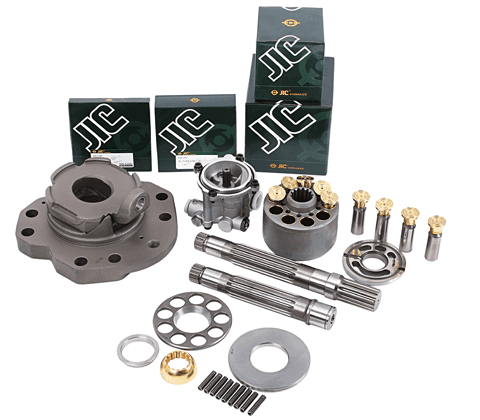
For familiar pump families like K3V or K5V, pump seals are almost always in stock. Bucket, stick and boom cylinders on common excavators are the same. This is why a technician always wants the exact model before quoting a price.
How origin and supply source matter
For the same kit, properly imported stock and grey-market stock carry different prices, and different service life. A stable source usually comes with paperwork, correct sizing and the right rubber compound. Suspiciously cheap parts are often recycled rubber pressed to loose tolerances that leak soon after fitting. When comparing prices, compare the same class of supply, or you are comparing the wrong things.
If you need a source of hydraulic seals with clear paperwork, ask the origin of the batch before you commit. A good source is always willing to say where their seals come from.
Full kit or single seals
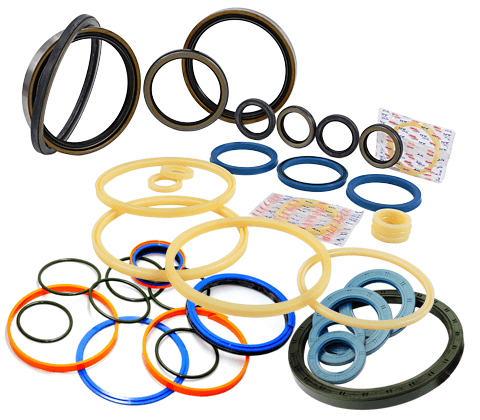
A complete cylinder seal kit includes the piston seal, the rod seal, the buffer ring, the dust wiper and the accompanying O-rings. Buying the full kit is usually priced as a package, tidy and with fewer omissions. Buying singles suits the case where only one position has failed, but adding up many singles can cost more than the full kit. An experienced technician weighs it up: once the cylinder is open, replace everything so you do not open it a second time.
Brand and material quality
This is where the price spreads out the most. At the same size, a seal from a reputable seal maker differs from a market seal in rubber quality, machining precision and durability. For dedicated hydraulic seals, we favour PET Seals, because the material is consistent, the sizing is accurate and it holds up to continuous working pressure out on site. Paying a little more for the right material is usually cheaper than paying to open the cylinder twice.
To understand the parts side more deeply, look through the hydraulic seal parts group to compare types before asking for a price.
Genuine versus aftermarket
Genuine seals are supplied by the machine maker or its appointed seal maker, with sizes and materials to the original design. Aftermarket seals are made by another manufacturer to the same sizes, with quality ranging from good to poor. Genuine prices are usually higher, in exchange for peace of mind on size and material. Which to choose depends on the machine, the working intensity and the budget; there is no single right answer.
Seal size and count inside one kit
The bigger the cylinder and the fatter the rod, the larger the seals and the more rings. A heavy crane cylinder can need far more seal pieces than a small stick cylinder. The count and size of the pieces together form the core of the price. This is exactly why no one can quote before knowing which cylinder.
How rod and bore condition affect the cost
The seal is only half the story. If the rod is deeply scored or the bore has gone oval, even new seals will fail quickly. Then the real cost climbs, because the rod must be treated, sometimes re-chromed, or the bore honed. An honest technician checks the rod and bore first, then talks about the seal kit, so you are not fitting seals onto a cylinder with a ruined surface.
Seal materials: rubber, PU, PTFE and their differences
Each position in the cylinder uses a material suited to it. The dust wiper, the buffer seal and the guide have different demands for hardness and wear resistance. The right material in the right position makes the cylinder run smoother and last longer. The wrong material, even if it looks identical, can harden or blister after a short time.
Major seal makers publish their material standards and working temperature ranges in their technical documents; for example the documentation from NOK clearly describes the material families used for each seal group. Reading along those lines, you will understand why two seals of the same size do not carry the same price.
Why a quote for the same kit shifts over time
Imported parts pricing responds to the exchange rate, freight cost and stock at any given moment. An older batch imported when the rate was low can be cheaper than a new one. In peak construction season, stock moves fast and sometimes must be ordered and waited for. So a quote from last month may not hold this month, and asking again before buying is worth doing.
Pump seals and cylinder seals: do not confuse them
Many people lump them together as a seal kit, but hydraulic pump seals and cylinder seals are two different groups. Pump seals sit at the shaft and pump flange, taking pressure and rotation speed. Cylinder seals sit at the rod and bore, taking linear motion. Quotes for the two groups differ, so when asking you must say clearly whether you need pump or cylinder seals.
Bucket, stick and boom cylinder kits differ
On the same excavator, each cylinder has its own size, so each seal kit is its own. The bucket cylinder is usually smaller than the boom cylinder. Prices therefore differ between cylinders on the same machine. When asking for a price, name the exact cylinder, not just the machine.
How to read a seal quote properly
A transparent quote should state clearly: the machine, the cylinder, full kit or singles, origin and warranty. If it is only one line reading seal kit next to a number, you can hardly tell what you are buying. Ask for each seal to be broken out, or at least for the full kit contents to be listed. The clearer the quote, the lower the risk of buying the wrong thing.
The costs that come alongside the kit
The kit price is only one part. Labour to open and close the cylinder, work on the rod and bore, topped-up hydraulic oil and extra gaskets are all real costs. Some places roll it all into one package price, others itemise. When comparing, compare the total cost up to the point the cylinder runs again, not just the kit price.
To see how these add up, the seal-replacement cost guide goes deep into labour and the accompanying costs.
Table of factors that affect the price
| Factor | Why it affects the price | Direction |
|---|---|---|
| Machine year and model | Sets seal size and count | Rare machines cost more |
| Origin and supply source | Material quality and paperwork | Proper source above grey stock |
| Full kit or singles | Number of seals to buy | Many singles can cost more |
| Brand and material | Durability and precision | Name brands cost more |
| Rod and bore condition | Whether surfaces need work | A bad rod inflates the cost |
How to ask for a seal quote properly
To get an accurate quote on the first try, prepare in this order:
- State the machine name, its year and the pump or cylinder model.
- Name the cylinder to reseal: bucket, stick or boom.
- Say whether you want a full kit or only a few pieces.
- State whether you need genuine or aftermarket.
- If possible, photograph the old seal with a ruler beside it.
Prepare these five facts and the seller need not keep asking, and you need not keep waiting.
Right size matters as much as right price
Buying at the right price but the wrong size still means buying again. The rod size, bore size and groove depth must match for the seal to hold. This is where many lose money by measuring in a hurry. The choosing the right seal size guide shows how to measure for a match before ordering.
When to replace the whole kit instead of singles
If the cylinder is already open, leaking in several places, or the seals have hardened with age, a full kit makes sense. The labour to open and close is nearly the same whether you change one piece or all of them. Singles are worth it only when exactly one position has failed and the rest are still good. Over the long run, one full kit is usually cheaper than opening the cylinder twice.
Warranty and after-sales are part of the price too
A cheap kit with no one accountable when it leaks early is not truly cheap. A decent seller states their return and warranty policy clearly. A slightly higher price backed by a commitment is sometimes the calmer choice. When comparing prices, count this service in as well.
Common mistakes that lead to a wrong price
The most common mistake is asking only for a price without naming the machine and cylinder. The second is comparing proper stock against grey stock and thinking the other side overcharged. The third is chasing cheap, buying poor rubber, and reopening the cylinder soon after. Avoid these three and you are already buying better than most.
Why bringing the old seal helps when asking for a price
With the old seal in hand, the seller matches the size fast and with fewer errors. The removed seal shows the rod size, the thickness and the lip profile, things hard to describe in words alone. If you cannot remove it, a photo of the seal beside a ruler also helps a great deal. This cuts the risk of buying the wrong size, and the seller quotes with more confidence having seen exactly what you need.
A short wrap-up so no quote catches you out
A cylinder seal kit price is the sum of machine year, origin, full kit or singles, brand and cylinder condition. There is no common number for every machine, only the right number for yours. Prepare the full information, ask clearly about supply source and warranty, and the quote will be transparent. If you need sizing advice and a quote matched to your exact machine, message our hydraulic seals team with the machine details for the closest quote.
Key takeaways
- A cylinder seal kit price depends on machine year, origin, full kit or singles, and brand.
- There is no common number, only the right number for your exact machine.
- Compare prices within the same supply class, not proper stock against grey stock.
- Once the cylinder is open, a full kit usually beats a second teardown.
- Check the rod and bore first, since a bad surface inflates the real cost.
- Prepare full machine and cylinder details to get an accurate quote first time.
Written by
Hoàng Anh Dũng
Hoàng Anh Dũng tracks sourcing, pricing and brands for heavy-equipment parts. He writes about what drives price, buying smart and telling apart part origins and quality.
Related parts
The exact parts discussed above — send your machine model or pump code to match.