Quick answer
The excavator swing system is the drivetrain that rotates the upper body on the undercarriage. It combines a swing motor, a reduction gearbox, a swing bearing and the control valves. When these four parts work in step, the house turns smoothly, stops cleanly and does not drift. Clean oil, regular bearing grease and a light hand on the joystick are the three habits that extend its life.
The excavator swing system is the drivetrain that lets the upper body rotate on the undercarriage below it. It has four main groups: the swing motor, the reduction gearbox, the swing bearing and the control valves that steer the oil flow. When all four work in step, the house turns smoothly, builds speed evenly, stops cleanly and holds on a slope without drifting. This guide explains what each part does, how they cooperate, and the simple habits that keep the assembly healthy.
What is the excavator swing system made of?
Picture the swing group as a chain that carries force. High-pressure oil from the pump passes through valves and drives the swing motor. The motor spins fast but with little torque, so it feeds a reduction gearbox that trades high speed for high force. The gearbox output shaft carries a small pinion that meshes with the internal ring gear of the swing bearing. The swing bearing is the large ring that joins the upper body to the undercarriage. As the pinion pushes the ring gear, the whole house turns.
These four groups are not separate. A fault in one often drags in another. That is why a technician looks at the whole assembly, not just one part.
What the swing motor does
The swing motor is where oil pressure becomes rotation. On most hydraulic excavators this is an axial piston motor, from the same families as the familiar K3V or K5V pumps. Inside sit a cylinder block, several pistons and a swash plate. Incoming oil drives the pistons, the pistons push against the plate, and torque is born.
A healthy motor gives a clean start, turns evenly and does not fade mid-swing. When the internal seals wear or piston clearances open up, oil leaks inside, force drops and the motor runs hotter than usual. If you suspect the motor, compare the right swing motors for your exact machine before deciding to open anything.
The reduction gearbox and ring gear
The reduction gearbox sits right under the motor and is usually a planetary set. It takes the motor fast rotation and returns slow rotation with very high force at the final shaft. That lets a compact motor turn the whole heavy body along with the boom, arm, bucket and load.
The gearbox has its own gear oil, separate from the main hydraulic oil. This oil lubricates the planetary gears and bushings. If it runs low or dirty, the gears wear fast and give off a whine or a gritty rattle when turning. The output shaft carries the pinion, and that pinion must always have enough grease where it meets the swing ring gear.
The swing bearing: the heart of the assembly
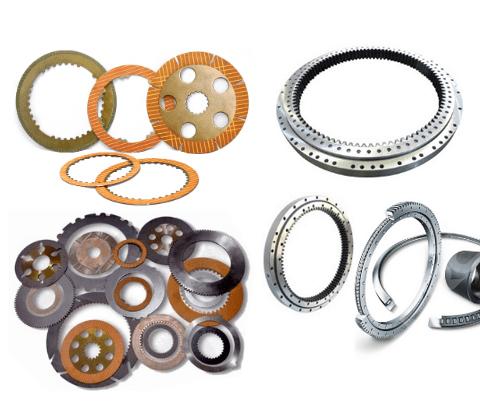
The swing bearing, also called the swing circle, is the part that carries the entire weight of the upper body. It is a large bearing with two rings: the outer ring bolts to one side, the inner ring to the other, with balls or rollers between them. One of the two rings is cut with gear teeth so the gearbox pinion can drive it.
Because the swing circle both carries heavy load and takes tilting force when the machine reaches out far, it wears over time. As it wears the clearance grows and the body starts to have play. This is an expensive and labour-heavy part to replace, so proper care truly pays off.
Anti-drift and relief valves
The swing group has a few small but important valves. The relief valve limits pressure when you stop the swing suddenly, protecting the motor from a pressure shock. The anti-drift valve keeps oil balanced on both sides of the motor when the machine sits on a slope, so the upper body does not creep downhill on its own.
When the relief valve weakens, the stop of a swing feels hard and jerky. When the anti-drift valve leaks, the house slowly rotates under gravity on a slope. Both signs are easy to mistake for a weak motor, so check calmly before you conclude.
How the swing brake works
Many machines have a disc brake inside the swing motor, a normally-applied type. When you leave the joystick centred, springs press the discs together and hold the house still. When you push the joystick to swing, a small oil flow releases the brake just before the motor starts to turn.
This brake keeps the machine from rocking while parked and while travelling on the road. If the brake-release oil is blocked, the brake releases slowly and the swing feels heavy at start. If the discs wear, the house will not hold firmly on a slope.
The oil that feeds the swing group
The swing group shares its oil supply with the other functions of the machine. Dirty or degraded oil directly affects the swing motor and the valves. Grit in the oil scores the pistons, jams valve spools and wears the pump. That is why filtration and oil quality are the foundation for both the swing and the pump.
If you are reviewing overall hydraulic health, look at the matching hydraulic-pump parts as well, because a weak pump also starves the swing even when the motor is fine. Many weak-swing cases actually start at the oil source, not at the motor.
How the parts cooperate when you swing
When you push the joystick, the main valve opens the oil path to the motor. At the same time, oil releases the brake. The motor starts to turn, drives the gearbox, the gearbox drives the pinion, and the pinion pushes the swing ring. The whole upper body turns with it. When you release the joystick, the valve closes, the brake clamps, and the relief valve absorbs the leftover momentum.
This chain happens in a fraction of a second. One weak link and the whole chain stumbles. That is why one symptom such as a weak swing can come from several different sources.
Signs the swing bearing is worn
A failing swing bearing usually warns you by feel rather than by a number. You may notice the body has slight play when changing direction, hear a knock at the ring when under load, or see the gap between the two rings change as you raise and lower the bucket.
A common check is to rest the bucket on the ground and press gently to lift the front of the tracks, then watch the swing gap. If the gap opens up clearly, the bearing is worn. Grease coming out black and full of metal flakes is another bad sign.
Signs the swing motor is weak
A weak swing motor feels like a slow start, a struggle to turn uphill, and sometimes a motor housing that runs noticeably hotter than the rest. Sometimes one direction is strong and the other weak, which hints at a seal or an internal valve problem.
Before opening the motor, rule out the simple causes: oil, filter, pump pressure, relief valve. A step-by-step routine is in the guide on checking the swing motor, followed in order so you do not swap the wrong part. Replacing a motor when the fault was really in a valve is common and very costly.
Reading the sounds when you swing
A technician ear is a good diagnostic tool. A high whine is usually low gearbox oil or missing grease at the gear mesh. A steady gritty rattle in time with rotation points to worn gears or worn bearing rollers. A single clunk when changing direction is usually play, from tooth or bearing clearance.
Listen with the machine cold and with it warm, because some sounds only appear once the oil thins out. Noting how the sound changes with load helps narrow things down faster.
Play and lag when reversing direction
A little lag when reversing is normal, but heavy play is not. Play comes from the clearance between the gearbox pinion and the swing ring, or from worn bearing rollers. When play is large, each change of direction jerks the body, the bucket shakes, and the welds around the circle take extra fatigue.
Do not try to swing in jerks to cover for the play. That driving style opens every clearance faster. Fixing the root cause beats getting used to the machine bad habit.
Greasing the swing circle correctly
Swing circle grease protects both the ball raceway and the gear mesh. Pump grease on the maker schedule, and swing the house slowly while you pump so grease spreads evenly around the ring. Pump at one spot without turning and the far half stays dry.
Use the correct heavy-load grease. The wrong grease washes out when the machine gets hot, leaving a dry raceway. If the old grease pushed out is black and gritty, keep pumping until clean new grease comes through.
Changing the reduction gearbox oil
Swing gearbox oil is a separate gear oil, and it gets dirty over time from the wear grit of the planetary gears. Changing it on schedule keeps the gears and bushings healthy. When you drain the old oil, watch the colour and the grit: grey metallic oil warns that the gears are wearing hard.
Never let the gearbox run low on oil. Even a short spell low can chip a planetary gear and create permanent noise. Checking the oil level and looking for leaks around the flange is a quick job worth doing.
Driving habits that keep the swing healthy
How you hold the joystick decides swing life more than you might think. A few simple habits:
- Move the joystick gently, avoiding sudden jerks both at the start and the stop.
- Do not swing with a full bucket at full reach, because tilting force loads the bearing.
- On a slope, avoid letting the house drift and then braking hard.
- Let the oil warm up before heavy work on a cold morning.
- Stop the swing before the end stop, so the motor does not slam into the limit.
These small things reduce the shock on the motor, valves and bearing. A machine driven with a light hand always lasts longer than one handled roughly.
Routine checks for the swing group
A regular check schedule catches faults early while they are still cheap. Every shift, listen for odd sounds and watch whether the house drifts on a slope. Every week, grease the swing circle and look for leaks around the motor and gearbox. On a longer cycle, check the swing clearance and change the gearbox oil.
If the machine already shows a weak swing, do not ignore it. The guide on a weak swing walks through the causes in order from easy to hard, so you do not replace an expensive part by mistake. A simple maintenance log also helps you spot a bad trend early.
Quick symptom and cause table
The table below gathers a few common symptoms and the first thing to think of. It is a guide to narrow things down, not a substitute for a real check on your own machine.
| Symptom | Think of first | What to do |
|---|---|---|
| Slow, weak start | Weak pump, oil, relief valve, motor | Check oil and pressure first |
| House drifts on slope | Anti-drift valve, swing brake | Inspect valve and brake discs |
| Heavy play on reverse | Worn teeth, worn bearing | Measure the swing gap |
| Whine while turning | Low gearbox oil, missing grease | Add oil, add grease |
| Heavy at start of swing | Slow brake release | Check brake-release oil |
Genuine or aftermarket parts
For the swing group, choosing genuine or aftermarket depends on the part and the budget. The swing bearing and the heavy-load gears rely on material quality, so many owners prefer good parts for these. Seals and gaskets are often well served by decent aftermarket parts.
According to the technical documents from Kobelco, the clearances and service schedule of the swing group are set to keep load spread evenly across the bearing. Following the maker guidance lets you compare parts more fairly, whether you choose genuine or aftermarket.
When to repair and when to replace
Not every fault needs a whole new assembly. A leaking seal, a stuck valve or missing grease can usually be fixed at modest cost. But when the swing bearing already has heavy play or a gear is deeply chipped, a patch repair rarely lasts.
Weigh the machine age, its hours and the parts price. Cost varies with the real condition and the supply source, so ask for a quote matched to your exact model before deciding. Fixing the true fault is cheaper than replacing the wrong part several times.
Order swing group parts
If your swing group shows signs of weakness or play, identify the right part before you buy. Browse the swing motors catalogue by model to compare, and contact our technical team if you need help choosing the right part for your machine.
Key takeaways
- The swing group is a motor, a reduction gearbox, a swing bearing and valves working as one force chain.
- One symptom such as a weak swing can have several sources, so diagnose the whole assembly, not one part.
- Clean oil and good filtration are the foundation for both the swing motor and the hydraulic pump.
- Grease the swing circle while turning slowly so the grease spreads evenly around the ring.
- A light hand, no jerky joystick moves and no heavy swing at full reach keep the assembly healthy.
- Fixing the true fault by checking in order, easy to hard, beats replacing the wrong expensive part.
Written by
Phạm Đức Thắng
Phạm Đức Thắng focuses on the undercarriage, tracks and the travel and swing systems of excavators. He writes about how these systems are built, travel and swing motors, and protecting the undercarriage from wear.
Related parts
The exact parts discussed above — send your machine model or pump code to match.
Related products
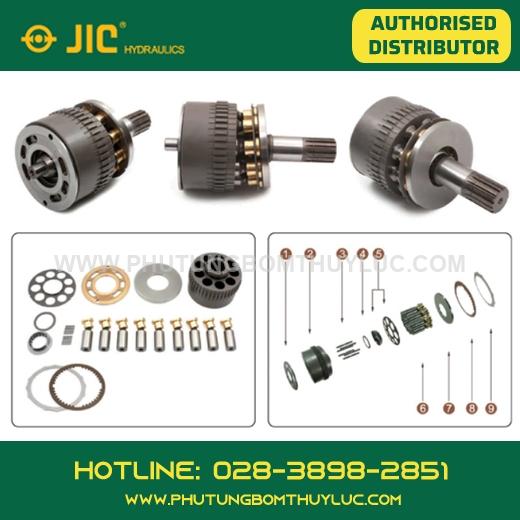 Kawasaki · M2XSwing motor rotary group – Kawasaki M2X120M2X120On requestView · get a quote
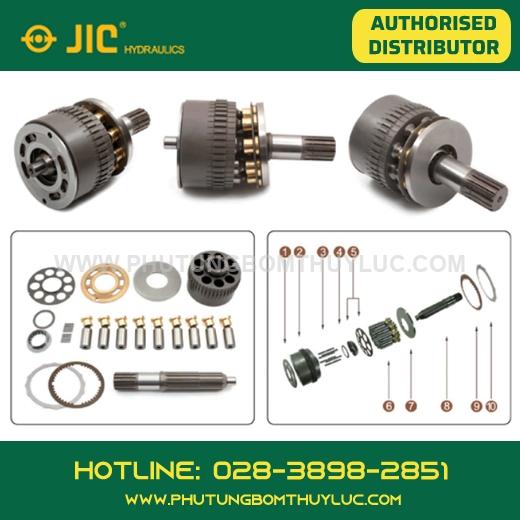 Kawasaki · M2XSwing motor rotary group – Kawasaki M2X146M2X146On requestView · get a quote
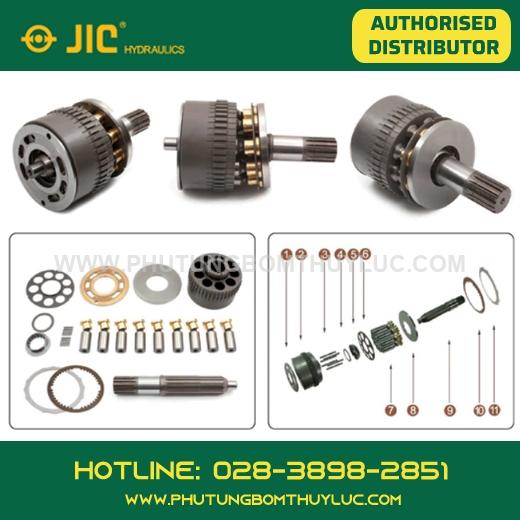 Kawasaki · M2XSwing motor rotary group – Kawasaki M2X150M2X150On requestView · get a quote
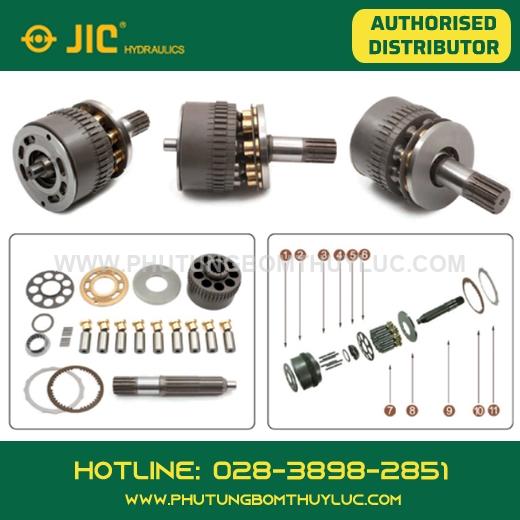 Kawasaki · M2XSwing motor rotary group – Kawasaki M2X170M2X170On requestView · get a quote