Quick answer
A piston hydraulic pump is an axial piston pump that uses a rotating cylinder block, several pistons and a swash plate to draw oil in and push it out at high pressure. As the block turns, the swash plate forces each piston in and out of its bore, and that motion is what creates flow. A larger swash plate angle means more flow. This is the unit that gives the boom, bucket and travel their strength.
A piston hydraulic pump is the main pump sitting behind the excavator engine, and its job is to turn the engine rotation into a stream of pressurised oil for the boom, bucket, swing and travel. Inside it are a rotating cylinder block, a row of small pistons and a swash plate. Once you see how these three parts work together, you read the machine faster, and you know when a simple adjustment is enough and when the pump has to come apart. This guide talks the way we talk in the workshop, not from a textbook.
What a piston hydraulic pump is
A piston hydraulic pump uses several pistons that slide in and out of bores to draw and push oil. On excavators, almost all of them are the axial piston type, meaning the pistons sit parallel to the pump shaft. Unlike a small, cheap gear pump, a piston pump handles high pressure and can vary its flow with the load. That is why the machine is both strong and economical during light work.
Why the piston pump is called the heart of the machine
Every powered motion on an excavator begins with the oil the pump pushes out. The boom lifts soil, the bucket bites into hard ground, the house swings smoothly, all thanks to pressure and flow from this unit. The engine is only the source of rotation; the pump is where that rotation becomes working force. A weak pump means a weak machine, even if the engine is still healthy. So when a machine loses power, an experienced hand looks toward the pump first.
Basic layout of an axial piston pump
An axial piston pump has a few main parts: the drive shaft, the cylinder block, the pistons with their slipper shoes, the swash plate, the valve plate and the control unit. The rotating parts, the block and pistons, are together called the rotary group. The stationary parts are the housing, the swash plate and the valve plate. According to the technical literature from Bosch Rexroth, it is the match between the rotating and stationary parts that decides the pump durability and efficiency. Once you see that boundary, you know which part to replace when worn and which one only needs re-lapping.
What the cylinder block does
The cylinder block is a round body with several bores drilled lengthwise, each holding one piston. It is coupled to the shaft and turns with it. The back face of the block sits flat against the valve plate, which has two slots: one for intake, one for discharge. As the block turns, each bore passes over the intake slot and then the discharge slot. The contact face between block and valve plate must stay sealed and flat; this is a common spot for internal leakage as the pump wears.
The pistons and how they run in the bores
Each piston is a small rod with a slipper shoe on the outer end that rests against the swash plate. As the block turns, the shoe slides across the tilted swash plate, so the piston is pulled out and then pushed in every revolution. When a piston moves out, its bore gains volume and draws oil in; when it moves in, it squeezes oil out. The whole row of pistons takes turns, so the output flow stays fairly even. To match parts for your machine, look at the pump pistons group by the exact pump code.
How the swash plate sets the flow
The swash plate is a flat surface set at an angle, and the slipper shoes ride on it. Its tilt, called the swash angle, decides how far each piston travels in and out. A large angle gives a long stroke, so each piston draws and pushes more oil per revolution. A small angle gives less flow, even though the shaft still turns at the same speed. Being able to change this angle is how an excavator pump matches its flow to demand.
The valve plate and the intake and discharge paths
The valve plate is a stationary plate between the block and the ports, with two curved crescent slots. One slot connects to the intake, the other to the discharge. When a piston bore is gaining volume, it sits over the intake slot and pulls oil in. When that bore shrinks, it moves to the discharge slot and pushes oil out. The sealed land between the two slots matters a lot; if this face is scored, high-pressure oil leaks back to the intake side and the pump loses power.
How does a piston hydraulic pump make flow and pressure?
Keep two ideas separate: flow and pressure. Flow is how much oil the pump pushes out over time, set by shaft speed and swash angle. Pressure is not made by the pump itself; it builds when the oil stream meets resistance, such as the bucket hitting hard ground. The pump tries to push oil, the load blocks it, and pressure rises until it overcomes the load. Grasp this and you understand why a machine can stay weak while the gauge still climbs, once flow has dropped.
Why changing the swash angle changes the flow
Picture a slipper shoe travelling once around the swash plate face. The more that face is tilted, the farther apart the highest and lowest points of its path become, so the piston travels a longer stroke. A longer stroke means each revolution swallows and delivers more oil. When the control pulls the swash plate closer to flat, the stroke shortens and flow drops. That is how the pump shrinks itself during light work, saving fuel and keeping the oil cooler.
What the rotary group includes
The rotary group is the set of rotating parts and wear surfaces: the cylinder block, the pistons and slipper shoes, the shoe retainer plate, and the working face of the valve plate. This is the group that wears naturally with running hours and with oil cleanliness. As these surfaces wear, clearances open up, internal leakage grows, and the pump weakens gradually. If your pump is a common family, you can view a hydraulic rotary groups listing by model to match a set. For machines on the K3V family, the guide on the K3V rotary group covers this unit in more detail.
The control unit and how the pump senses load
An excavator piston pump does not run at a fixed flow. It has a control unit, often called the regulator, that reads pressure signals and system commands and then adjusts the swash angle. When the load is heavy and pressure rises, the control pulls the angle smaller so it does not overwork the engine. When the load is light, it opens the angle wider for speed. This is how a limited engine can still handle many different jobs without stalling.
Signs a piston pump is getting weak
A pump rarely fails all at once; it weakens gradually and gives warning signs. The most common ones are:
- The machine slows when you combine motions, such as curling the boom while swinging.
- The bucket loses force biting into hard ground, even at full throttle.
- The machine is clearly weaker once the oil is hot, compared with a cold start.
- Boom in-and-out speed becomes uneven instead of smooth as before.
These signs usually come from growing clearances in the rotary group, with internal leakage rising as hot oil thins out.
Listening to the pump to read its condition
A technician ear is a good diagnostic tool. A healthy pump runs steady, with a low and continuous tone. When a pump starts to starve for oil or draws in air, it whines and knocks in pulses, like gravel rattling. That sound is often worse when the oil is cold and thick or the suction filter is choked. If your machine sounds odd, the guide on a noisy hydraulic pump describes each type of sound and its likely cause so you can match it correctly.
How temperature and oil quality affect the pump
Oil is both the medium that carries force and the lubricating film between surfaces inside the pump. Dirty oil carries grit that scratches the block and valve plate, opening clearances quickly. Oil that runs too hot thins out, the film gets thinner, and the surfaces touch and wear. So keeping the oil clean and cool is the same as protecting the life of the rotary group. Many pumps die early not from design, but from neglected oil.
When the rotary group needs replacing
Weakness does not always mean replacing the whole pump. If the housing and shaft are still good, often only the rotary group needs replacing or reconditioning. The signs you have reached that point are clear weakness when the oil is hot, heavy internal leakage, or a block and valve plate scored too deep to lap out. Fitting the correct set with the correct clearance restores the machine power without the cost of a whole new unit. The cost varies by machine model and by supply source, so check the real condition before deciding.
Genuine parts versus aftermarket
The market has genuine parts from the maker and aftermarket parts made by third parties. Genuine parts fit to standard and hold their durability, but they cost noticeably more and can involve a wait. Aftermarket quality varies: a good one runs long, a poor one wears fast and damages the whole unit. For a force-critical part like the rotary group, favour a clear, known source over the cheapest price. A price gap does not tell the whole story; what matters is the material pairing and the machining accuracy.
A quick check at the workshop
Before opening the pump, rule out the easy causes first. Check the oil level and oil condition, and see whether the suction and return filters are choked. Feel the pump body under heavy work to sense any abnormal heat. Listen to the sound cold and then hot, and compare the two. Many jobs blamed on the pump turn out to be a choked filter or overdue oil, and the machine recovers once that is fixed.
Maintenance that keeps the pump alive
Keeping a pump alive needs no secret trick, only consistency. Change the oil and filters on schedule, and use the oil type the maker recommends. Do not let the machine draw air from low oil or a leaking suction line. On a cold start, let the machine idle gently for a few minutes to warm the oil before heavy work. These small habits stretch the life of the rotary group more than you would expect.
Choosing pump parts for the right machine model
Piston pumps come in many families and variants by machine model, so choosing the wrong code means it will not fit or will run at the wrong flow. Before buying, note the pump number stamped on the body and cross-check it against the machine model. If unsure, send a photo of the pump tag to the seller so they can look it up. The hydraulic-pump parts store is arranged by pump family so you can find the right part for your machine.
Common mistakes when repairing a piston pump
The most common mistake is replacing the pump without finding the root cause, so the new pump fails the same way. Some people skip flushing the system after the old pump broke, letting leftover metal debris destroy the new one. Some fit a rotary group with the wrong clearance and then wonder why the machine is still weak. And many forget that dirty oil is the real culprit. Repairing the pump without fixing the oil-care habit ends in another failure sooner or later.
Quick symptom reference table
| Symptom | Likely cause | Check first |
|---|---|---|
| Weaker when oil is hot | Internal leakage from a worn rotary group | Check clearances, block and valve plate condition |
| Whine and pulsing knock | Oil starvation or air ingress | Check suction filter, oil level, suction line leaks |
| Slow with combined motions | Flow has dropped | Check control unit and swash angle |
| Oil heats up fast | Internal leakage turning into heat | Check rotary group and oil condition |
This table is only for narrowing down, not a substitute for real measurement at the workshop.
What pump life depends on
There is no fixed number for pump life, because it depends on use and care. A machine on clean ground, with oil changed on time and a gentle operator, gives the pump a long life. A machine in dust, with overdue oil or rough bucket work, wears the pump down fast. In other words, most of the life is in the user's hands, not just in the pump quality. Cared for well, one pump unit serves many seasons of work.
If you suspect a weak pump and want to match a rotary group or pistons for the right machine model, bring the pump number and cross-check it at the hydraulic-pump parts store. Checking carefully before replacing always costs less than guessing, and it brings your machine back to its proper power.
Key takeaways
- A piston hydraulic pump uses a rotating cylinder block, pistons and a swash plate to draw and push high-pressure oil.
- The swash angle sets the piston stroke, so it sets the pump flow.
- Pressure is not made by the pump itself but builds when the oil stream meets a resisting load.
- The rotary group wears naturally; growing clearance weakens the pump, most clearly when the oil is hot.
- Clean, cool oil is the cheapest way to protect the life of the rotary group.
- Choose parts by the exact pump code and measure before replacing to avoid wasted cost.
Written by
Phạm Đức Thắng
Phạm Đức Thắng focuses on the undercarriage, tracks and the travel and swing systems of excavators. He writes about how these systems are built, travel and swing motors, and protecting the undercarriage from wear.
Related parts
The exact parts discussed above — send your machine model or pump code to match.
Related products
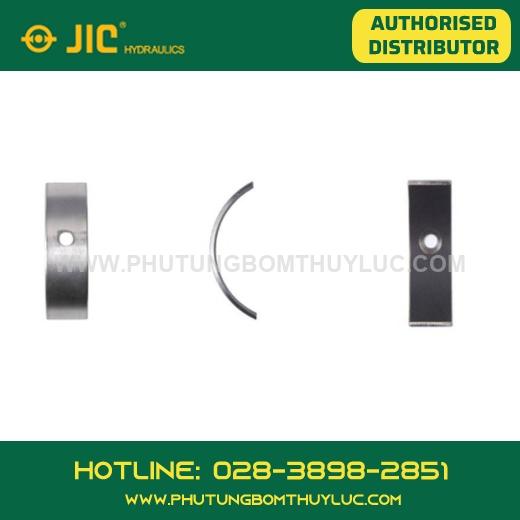 Kayaba (KYB) · PSVBushing – Kayaba PSVD2-17PSVD2On requestView · get a quote
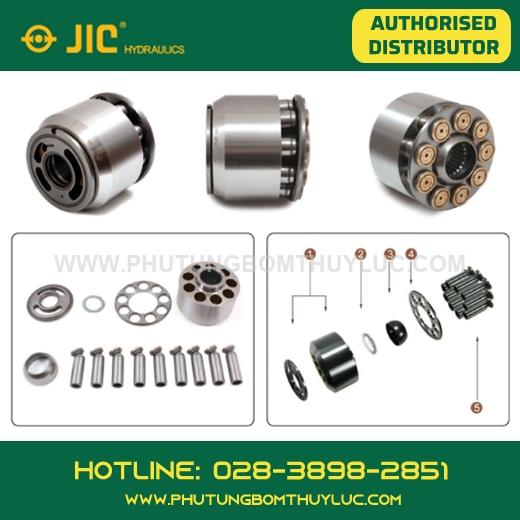 Kayaba (KYB) · PSVRotary group – Kayaba PSV2-55TPSV2On requestView · get a quote
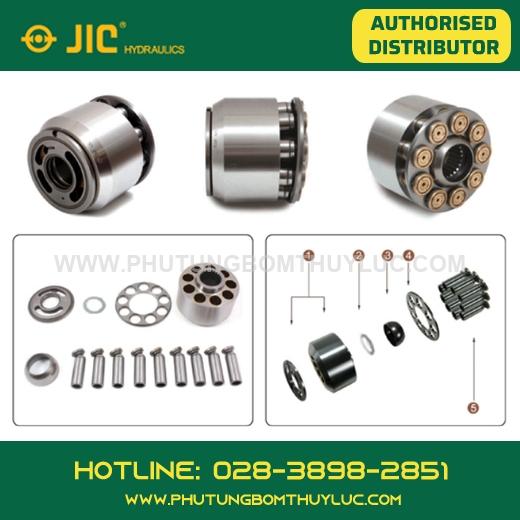 Kayaba (KYB) · PSVRotary group – Kayaba PSV2-60TPSV2On requestView · get a quote
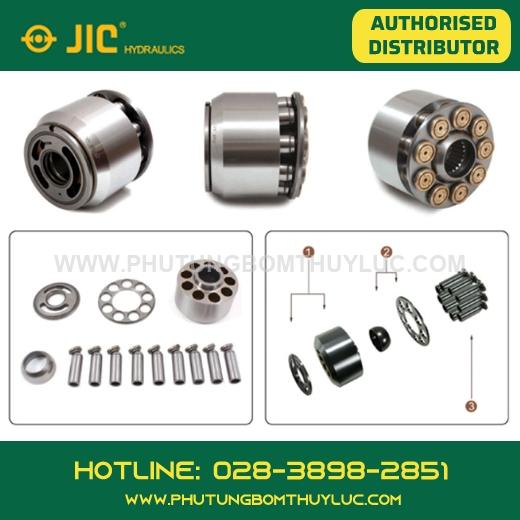 Kayaba (KYB) · PSVRotary group – Kayaba PSV2-63TPSV2On requestView · get a quote